A pet’s story is made of more than milestones. It also lives in the route they take through the house, the sound that means they want something, the distance they choose from another pet, and the place where they wait at a particular time of day.
You do not need to write a full life story to preserve those details. Choose one photo, answer one specific question, and write one honest sentence. The sentence can record what happened before the shutter, what the silent image cannot include, or why the moment feels unmistakably like your pet.
These 25 pet story prompts are designed for that small beginning. Use them in any order. Skip anything that does not fit, keep private details private, and let one sentence be enough.
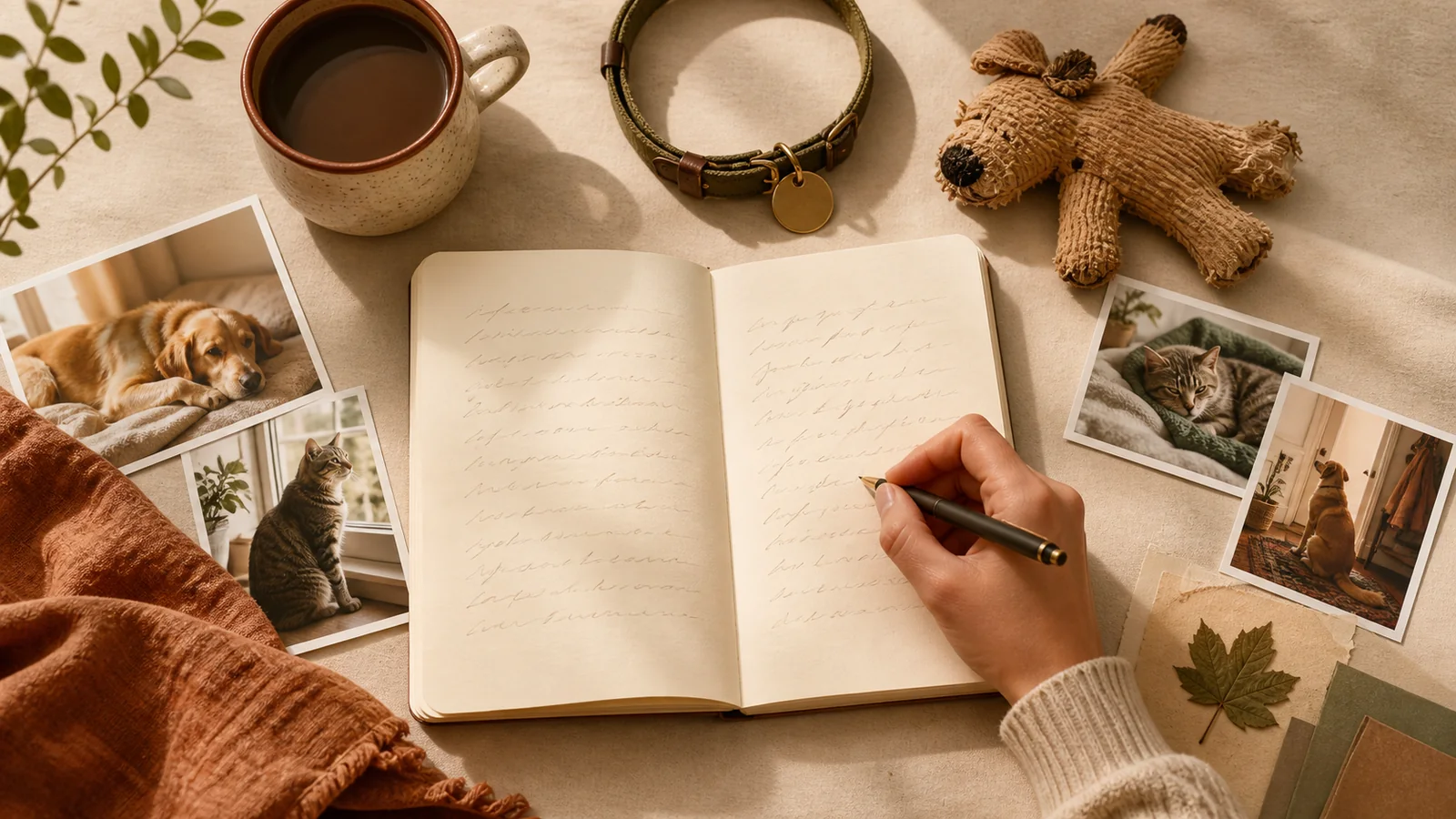
A simple one-photo, one-sentence method
Start with an image already on your phone. It does not need to be the best photo. A slightly blurred frame, an ordinary nap, or a pet facing away may hold more context than a formal portrait.
Then use this three-part note:
- What is visible? Describe the action, posture, place, or object without guessing.
- What is missing from the image? Add the sound, sequence, person, or routine the camera could not record.
- Why does it matter to you? Finish with one concrete reason this moment feels characteristic.
The RSPCA’s recent animal-behavior photography activity similarly pairs images with descriptions of what an animal is doing and the body language that is visible. For a personal story, you can add the family context only you know while keeping the observation itself clear.
Five prompts for the story around one photo
1. What is happening just beyond the edge of this picture?
Name the person, doorway, toy, sound, or destination that the frame leaves out.
2. What happened one minute before and one minute after this moment?
Write the tiny sequence rather than describing only the frozen middle.
3. Which detail in this image would your family notice first?
It might be an ear, paw, posture, chosen distance, or familiar object.
4. What sound belongs with this silent image?
Record a bark, chirp, sigh, collar sound, footstep, purr, or household noise in your own words. You do not need to spell it perfectly.
5. Finish the sentence: "This is so [pet’s name] because…"
Be specific enough that the sentence would not fit every dog or cat.
Five prompts for daily routines
6. Where do they appear when they think something important is about to happen?
Describe the location and the first signal that brings them there.
7. What route do they take through the home at the same time each day?
Follow the path from beginning to end, including any pause or detour.
8. Which spot have they unofficially claimed, and how do they settle into it?
Record the shape they make, the direction they face, and anything they move before resting.
9. What do they do while everyone else is busy?
Think about cooking, working, cleaning, packing, or getting ready to leave.
10. Which ordinary five-minute moment would make the room feel different if it were missing?
Choose something small enough to be overlooked precisely because it happens so often.
Five prompts for quirks and recognizable details
11. What object do they use in a way it was never intended to be used?
Perhaps a box becomes a bed, a cushion becomes a lookout, or a toy becomes a pillow.
12. How do they ask for something without making a sound?
Describe the sequence of looks, movement, touch, waiting, or strategic positioning.
13. Which ear, paw, tail, whisker, or posture gives them away from a distance?
Write what it looks like and when you notice it most.
14. What harmless household rule exists only because of them?
Record the adjustment everyone now makes automatically.
15. What tiny behavior still makes you laugh after the hundredth time?
Describe the action plainly before explaining why it is funny to you.
Five prompts for relationships
16. How is their greeting different for each person?
Compare two greetings through movement, distance, sound, or timing without ranking which person is loved more.
17. Who or what do they choose to sit near, and what distance feels normal?
The space between bodies can be part of the story.
18. What shared ritual belongs only to the two of you?
Choose something repeatable: a pause on a walk, a place on the sofa, or a small exchange that another person might not recognize.
19. What changes when another pet enters the room?
Record where each animal moves and what happens next. Avoid assigning motives you cannot observe.
20. What does someone else notice about your pet that you sometimes miss?
Ask for one concrete observation, not a general description.
Five prompts for time and place
21. Which place is inseparable from your memory of them?
Describe the light, floor, furniture, plants, path, or view that makes the place specific.
22. What changes in their routine when the weather, season, or daylight changes?
Keep the answer grounded in a visible choice such as a warmer spot, a shaded floor, or a different window.
23. What was the first ordinary habit that made them feel at home?
This does not need to be the day they arrived. It may be the first time they claimed a place, began a routine, or relaxed near someone.
24. Which habit has changed over time, and which part remains exactly the same?
Write both halves. Change and continuity can exist in the same memory.
25. If you could keep one unremarkable scene in perfect detail, which scene would it be?
Describe only five minutes. Include where everyone is, what the pet is doing, and one sensory detail the camera would miss.
Make the answer specific without making it long
General descriptions fade quickly: "She loved the window" or "He was always funny." A specific sentence gives the memory a shape:
Every afternoon, she sat on the narrow end of the windowsill and turned one ear toward the hallway whenever the elevator stopped.
That example is fictional, but the method is practical. Add a place, action, time, object, sound, or sequence. One concrete detail usually does more work than several adjectives.
Date the note and keep it beside the photo if you can. A photo caption, a file note, a private document, or a line in a notebook can all work. The best system is one simple enough to use again.
Let the story guide the next photograph
Writing can reveal what the camera roll is missing. If you describe a doorway greeting but have no image of it, add that moment to your next at-home photo list. These 15 pet photography ideas at home can help you notice routines without building a staged scene.
If you have many images but cannot decide which one feels most characteristic, use the seven clues in how to capture your pet’s personality in photos. The goal is not a flawless archive. It is a small set of images and sentences that still make sense later.
When a written memory becomes a visual brief
A story note can also clarify what you would want another person or artist to notice. "The left ear always tips when she listens" communicates more than "please capture her personality." "He waits beside the door with one paw forward" explains why one pose matters more than another.
If you later choose to create art from your photos, keep the story sentence with the clear reference images. The pet sculpture photo guide explains the practical views that can support a visual reference set. Tiny Presence creates custom pet sculptures from photos, but the prompts are meant to stand on their own: one photo, one question, and one detail you do not want the image to lose.
Start with prompt five: "This is so them because…"