A shelter form asks for a breed. A photo app announces “Maine Coon.” A friend looks at the stripes and says “tabby,” as though the mystery is solved. If your cat came home without pedigree papers, the honest answer may feel frustratingly plain: domestic shorthair or domestic longhair. That is not a lesser label, and it does not make your cat generic. This guide separates breed from coat length and pattern, explains what photos, paperwork, and DNA can actually establish, and gives you useful wording for insurance, veterinary, and adoption forms—without pretending appearance can reveal a family tree.
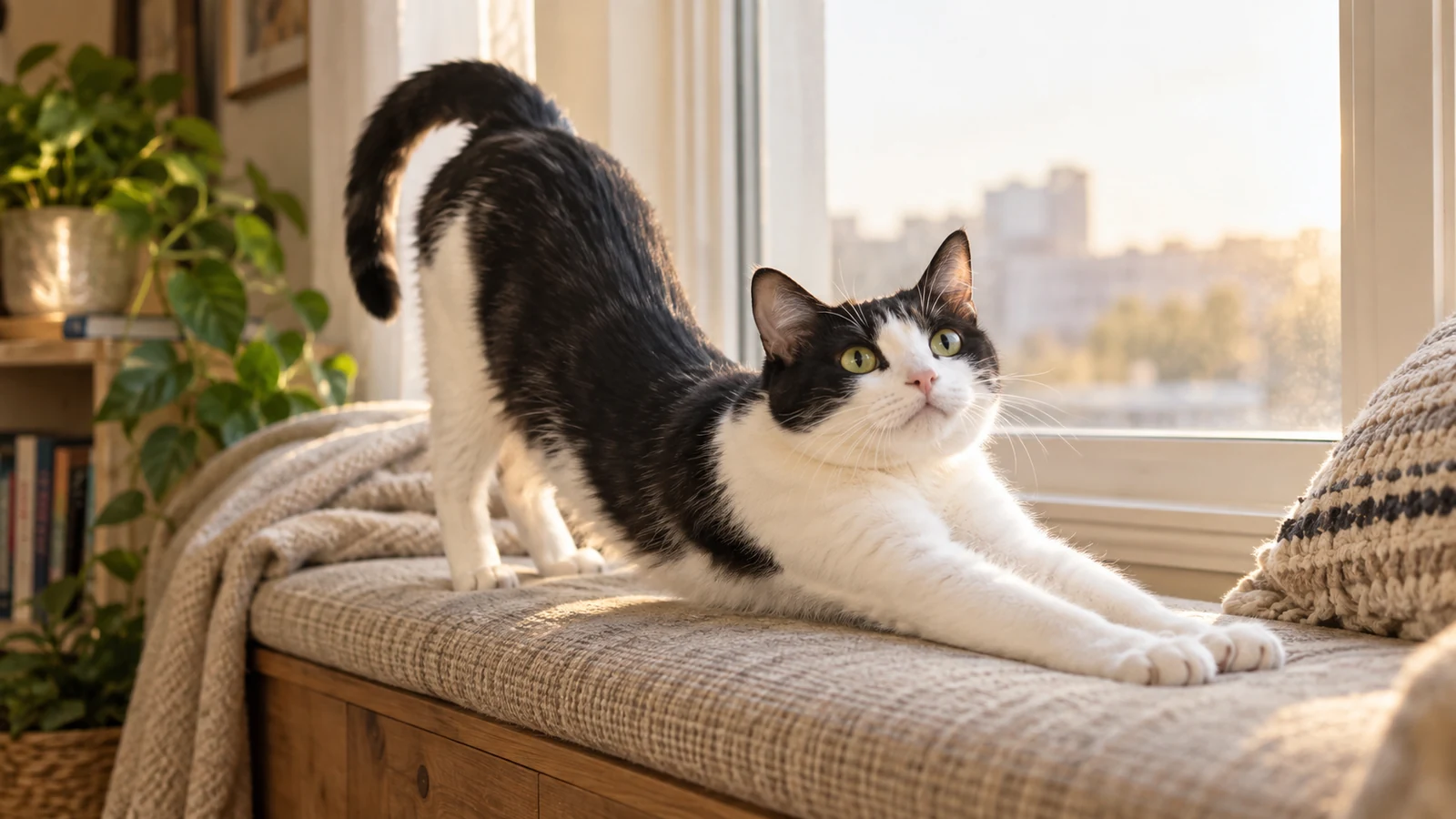
Quick answer: If your cat has no registration or pedigree record, “domestic shorthair,” “domestic longhair,” or “domestic medium hair” is usually more accurate than guessing a breed from appearance. “Tabby,” “tortoiseshell,” “calico,” “tuxedo,” and “colorpoint” describe coat patterns or coloring, not breeds. Photos can help describe visible traits, but they cannot reliably prove ancestry. A DNA result may estimate population or breed similarity, yet it is not the same thing as documented parentage.
Breed, coat length, and pattern are three different answers
The word breed refers to a recognized population with a documented breeding history and a standard maintained by a registry. Cats Protection explains that a pedigree cat is registered with a breed association and comes with proof of pedigree and parentage. The International Cat Association’s terminology guide defines a domestic longhair or shorthair as a domestic cat that is not registered as a recognized breed.
Coat length is simply a visible physical description. Pattern and color describe what the coat looks like. These categories can overlap in one perfectly ordinary sentence: “She is a domestic shorthair with a brown mackerel-tabby pattern and white paws.”
| Word on a form | What it actually describes | Example |
|---|---|---|
| Breed | Documented or formally recognized ancestry | Maine Coon, Siamese, Ragdoll |
| Coat length | How long the fur is | Domestic shorthair, medium hair, or longhair |
| Pattern | How colors and markings are arranged | Tabby, tortoiseshell, calico, tuxedo, colorpoint |
| Color | The visible coat color or colors | Black, blue-gray, orange, cream, white |
Why a photo cannot confirm your cat’s breed
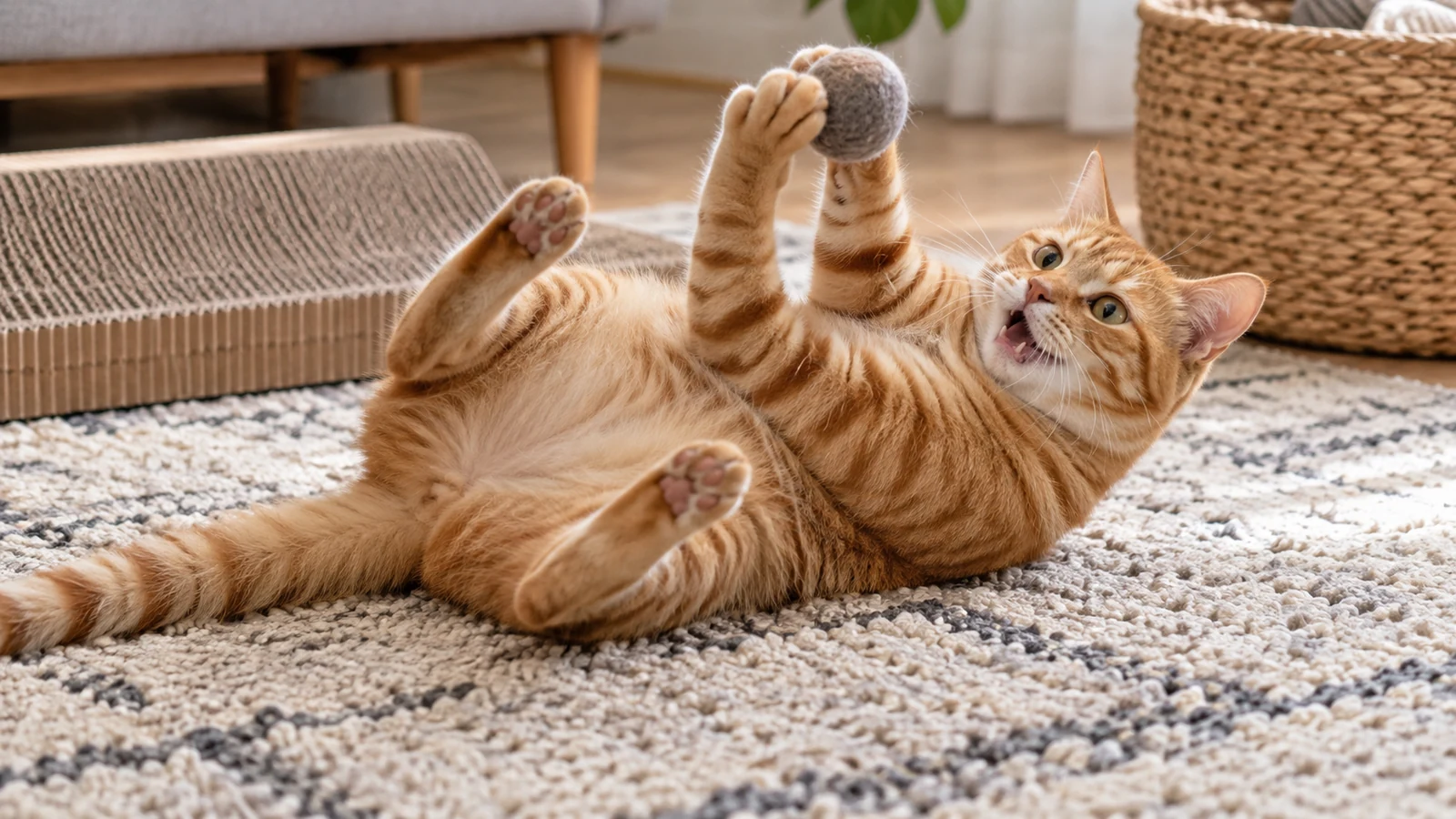
Many unrelated cats share the same visible features. Long fur, ear tufts, a broad face, a colorpoint coat, or a spotted pattern may occur in a recognized breed, but the feature alone does not establish that ancestry. A large, fluffy cat can resemble a Maine Coon without being one; a colorpoint cat can resemble a Siamese without documented Siamese parentage.
The history helps explain the uncertainty. A peer-reviewed analysis of breed assignment noted that the organized cat-breed system is comparatively recent and that closely related breed groups make genetic identification challenging. Another large UK study found that domestic shorthair, longhair, and semi-longhair cats in its sample formed a random-bred population rather than a simple pool of pedigree crosses.
That is why a confident photo-app percentage should be treated as entertainment or a prompt for further research, not proof. The image shows phenotype—what the cat looks like. It does not show a certified family tree.
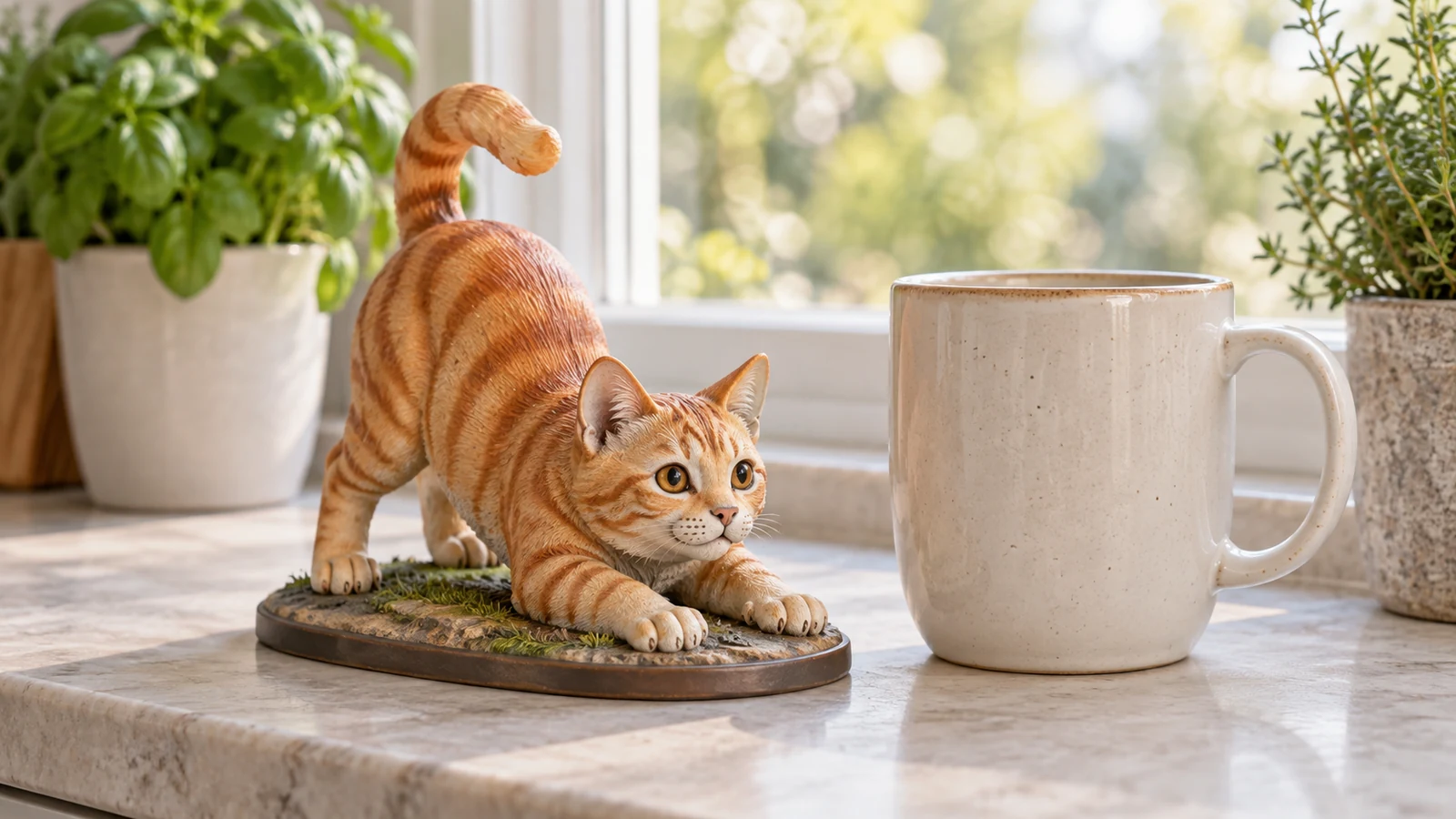
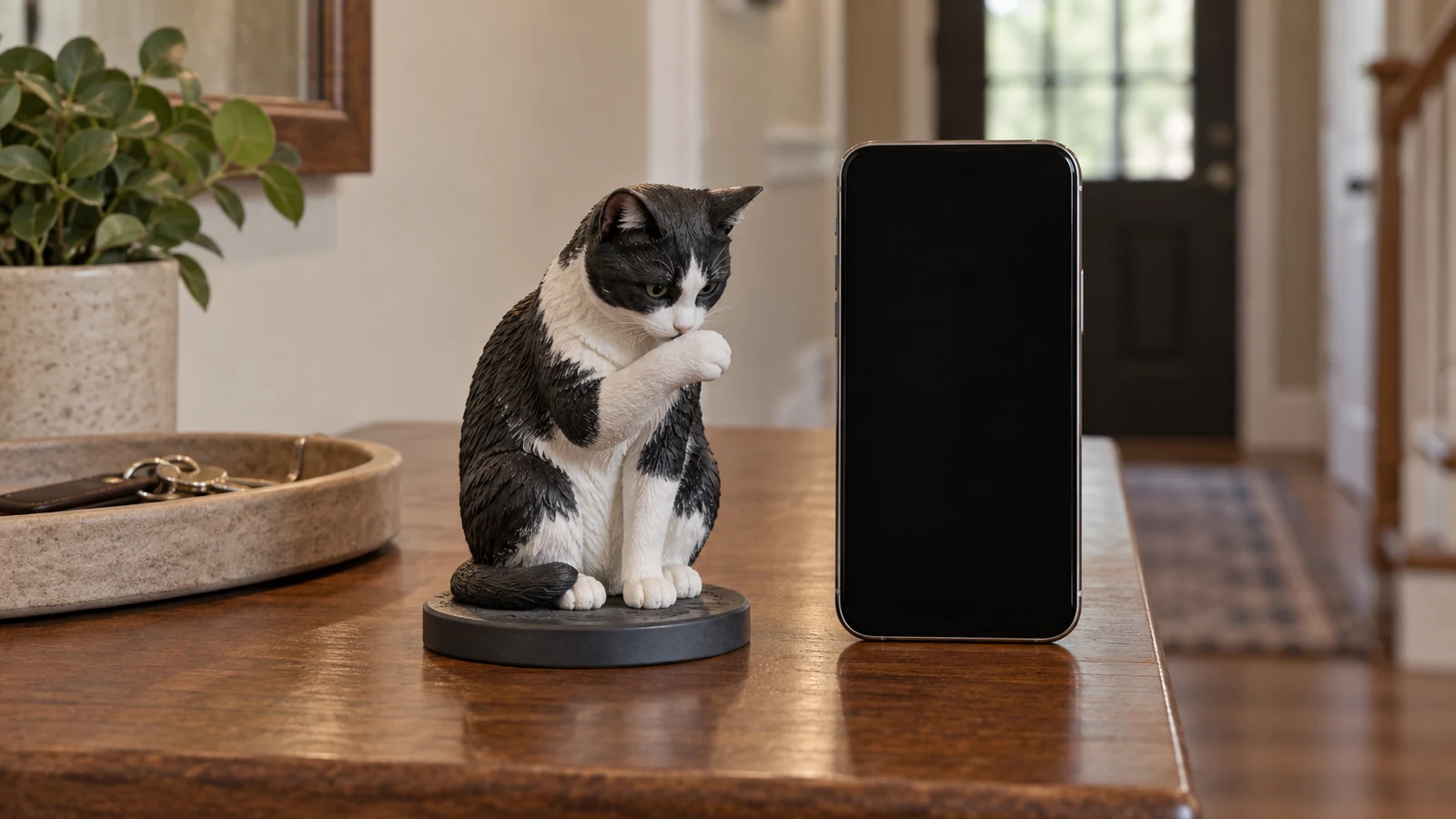
If you are gathering photographs because you want to preserve a cat’s appearance, a perfect breed label is not required. Distinctive markings, posture, expression, and the way the cat holds their ears or tail are often more useful than a guessed ancestry. A custom pet sculpture, for example, can be planned from those individual visual details rather than from a breed stereotype.
What can actually tell you more?
1. Pedigree papers and registry records
For a formal breed claim, documentation is the strongest evidence. Registration certificates and a recorded pedigree connect an individual cat to registered parents and a recognized breeding program. If a breeder, rescue, or previous owner says a cat is a particular breed, ask what record supports the statement. “Looks like” and “is registered as” are different claims.
No paperwork does not prove that a cat has zero pedigree ancestry somewhere in the past. It means you do not have the evidence needed to name a formal breed with confidence.
2. Information from a shelter, previous owner, or veterinarian
A shelter or previous owner may know something about the parents or litter. Keep the wording as precise as the evidence: “mother was recorded as Siamese” says more than “Siamese mix,” while “breed unknown; colorpoint coat” is clearer than a confident guess.
Your veterinarian can record coat length, color, body condition, age estimate, and other observable information. Those details are useful for identification and care even when breed is unknown. A breed label should not be used to diagnose an individual cat or to predict personality; behavior, health history, examination, and the cat’s actual circumstances matter more.
3. DNA tests—with careful expectations
Cat DNA tests can answer several different questions. Some look for particular health variants, coat-color genes, or parentage markers. Others compare a cat’s DNA with reference groups and report statistical similarity. Those services are not interchangeable, and a percentage on a consumer report is not a pedigree certificate.
The distinction is not merely academic. The University of California, Davis Veterinary Genetics Laboratory states directly that it does not offer a cat breed test and labels its parentage-verification service “not a breed test.” Its page separately lists coat-color and health tests. Before buying any kit, read exactly what the laboratory measures, which reference populations it uses, and what it says the result cannot prove.
If you are considering testing because of a health concern, ask your veterinarian which test—if any—would be relevant to that individual cat. A breed-similarity report is not a medical diagnosis.
Is my cat a Maine Coon, Siamese, or another mix?
It is reasonable to notice a resemblance. The trouble begins when resemblance is turned into certainty. Use “Maine Coon–like features,” “colorpoint domestic shorthair,” or “possible breed ancestry reported by the previous owner” when that is all the evidence supports.
For example, Maine Coons are a documented breed with a particular history and formal standard; tufted ears and a long coat do not belong to that breed alone. If the breed itself interests you, our history of the Maine Coon explains how the recorded breed developed without turning every fluffy cat into one.
Try not to use a guessed breed as a shortcut to personality. Cats Protection notes that breed does not guarantee temperament and that early socialization and life experience also matter. The better description is often the one you can observe: “confident with visitors,” “hides from loud sounds,” “likes high resting places,” or “needs daily grooming.”
What should you write on insurance, veterinary, or adoption forms?
Use the most accurate option the form allows:
- Choose domestic shorthair, medium hair, or longhair when there is no documented breed.
- Choose mixed or unknown if the form does not offer a domestic-cat category.
- Add the coat pattern and color in a description field: for example, “black-and-white domestic shorthair” or “brown tabby domestic longhair.”
- Use a breed name only when the record supports it. If ancestry is reported but not documented, ask the organization how it wants that uncertainty entered.
- Keep the wording consistent across the microchip record, veterinary file, insurer, and emergency contact sheet when practical.
For insurance, answer the insurer’s question exactly and contact the company if its categories are unclear. Policies and definitions vary by provider and country, so a general article cannot tell you how a particular company will classify a cat or assess coverage.
“Domestic” does not mean indistinct
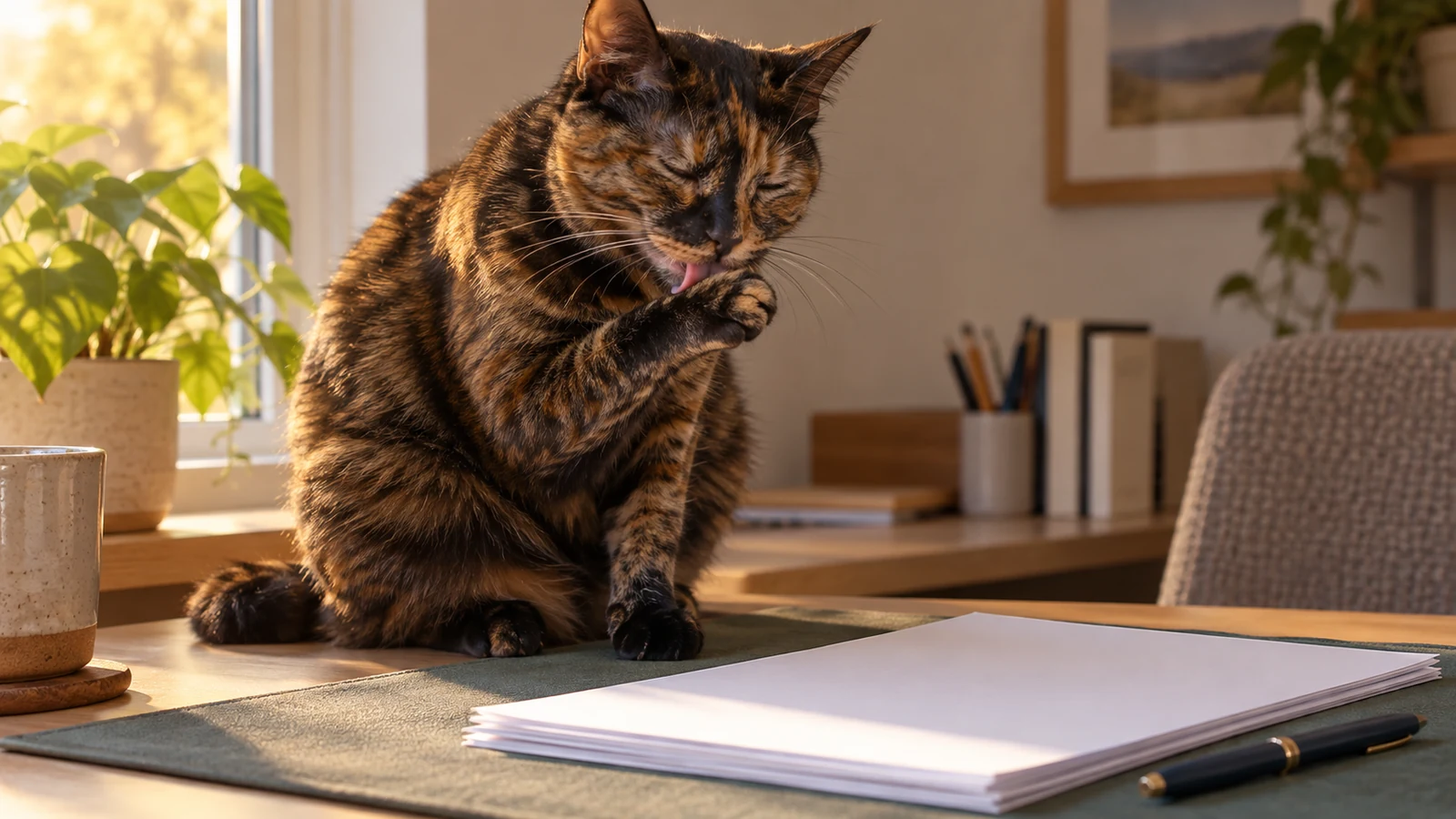
A domestic shorthair is not a single standardized breed. It is a practical umbrella for cats with varied ancestry and short coats. That variety is the point: two domestic shorthairs can differ in color, build, face shape, voice, movement, and behavior while sharing the same broad label.
Your cat’s identity lives in those individual details. Notice the uneven white sock, the tiny nick in one ear, the serious expression before a pounce, or the habit of crossing both front paws on the same shelf. Those observations are better records of the animal in front of you than a confident label generated from one photograph.
If you eventually want a physical keepsake, choose the image that best shows those unmistakable details. Tiny Presence offers custom full-color pet sculptures in 10, 12, and 15 cm finished heights. The useful starting point is not a fashionable breed name; it is a clear reference that shows your cat’s real markings, proportions, and expression.
The honest label leaves room for the real cat
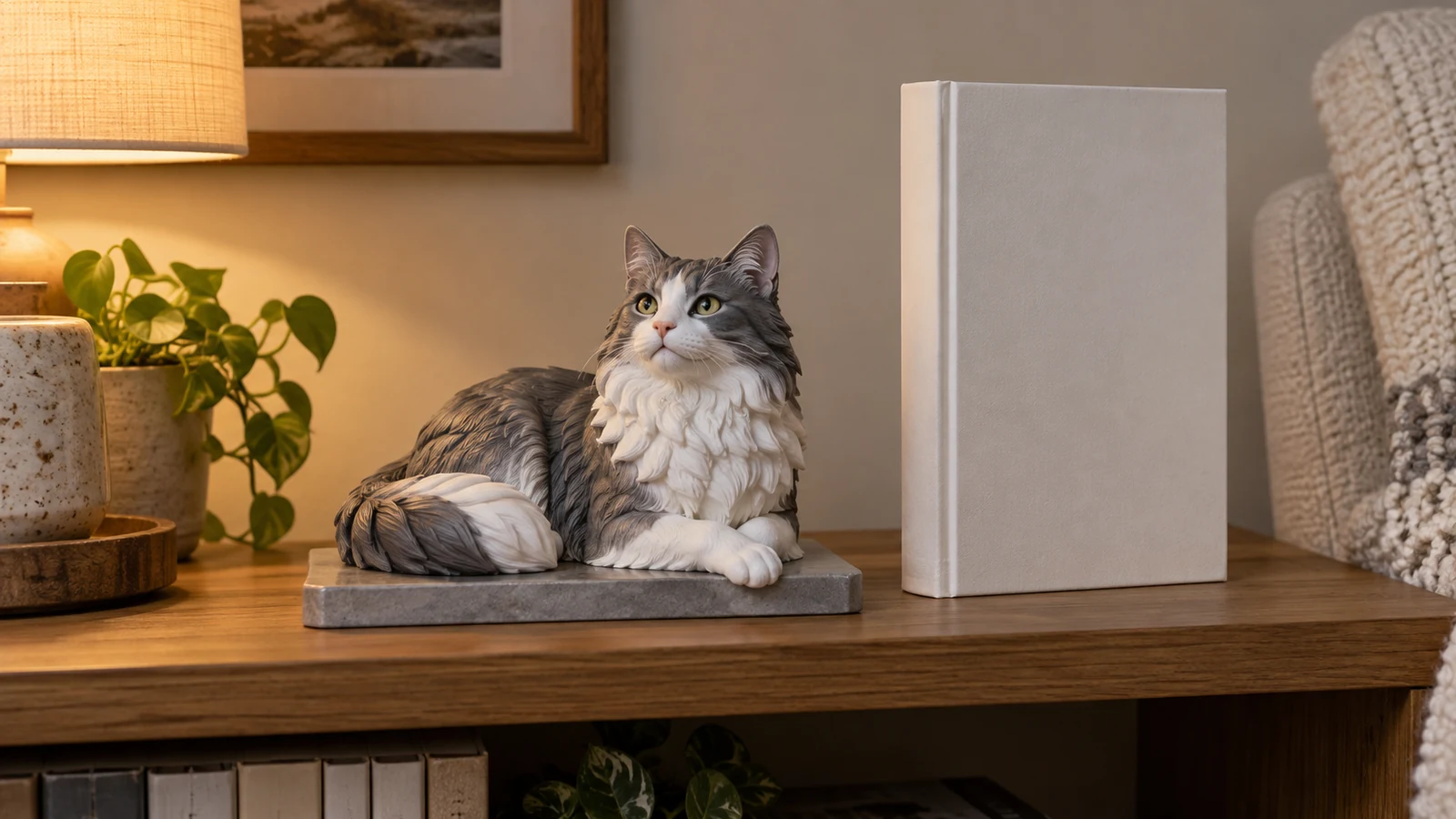
When the ancestry is undocumented, “domestic shorthair,” “domestic medium hair,” or “domestic longhair” is not a disappointing fallback. It is a precise answer to the evidence you have. Add the coat color and pattern, keep any known history in careful language, and let paperwork remain paperwork.
You do not need a registry name to explain why this cat matters. The useful truth is already visible in the way they move through your home, respond to familiar people, and repeat the small habits that belong to no other cat.
Frequently asked questions
Is tabby a cat breed?
No. Tabby describes coat markings, including patterns commonly called mackerel, classic, spotted, and ticked. Cats from recognized breeds and cats with no documented breed can both be tabbies.
Is domestic shorthair a breed?
In everyday veterinary, shelter, and household use, domestic shorthair is a broad description for a short-coated cat without a documented recognized breed. It is not one standardized pedigree breed.
Can a vet tell what breed my cat is?
A veterinarian can describe physical traits and may recognize features associated with particular breeds, but appearance alone usually cannot prove ancestry. Registration or pedigree records provide stronger evidence for a formal breed claim.
Can a DNA test identify my cat’s breed?
Some commercial tests estimate similarity to reference populations; others test parentage, health variants, or coat traits. Results depend on the test and database. A similarity estimate is not the same as a pedigree certificate, so read the provider’s limitations carefully.
What is a moggy?
“Moggy” is a common British term for a non-pedigree cat. Depending on coat length, the same cat may be described more formally as a domestic shorthair, medium hair, or longhair.
For more evidence-led breed history and everyday cat guides, continue through the Tiny Presence Blog.