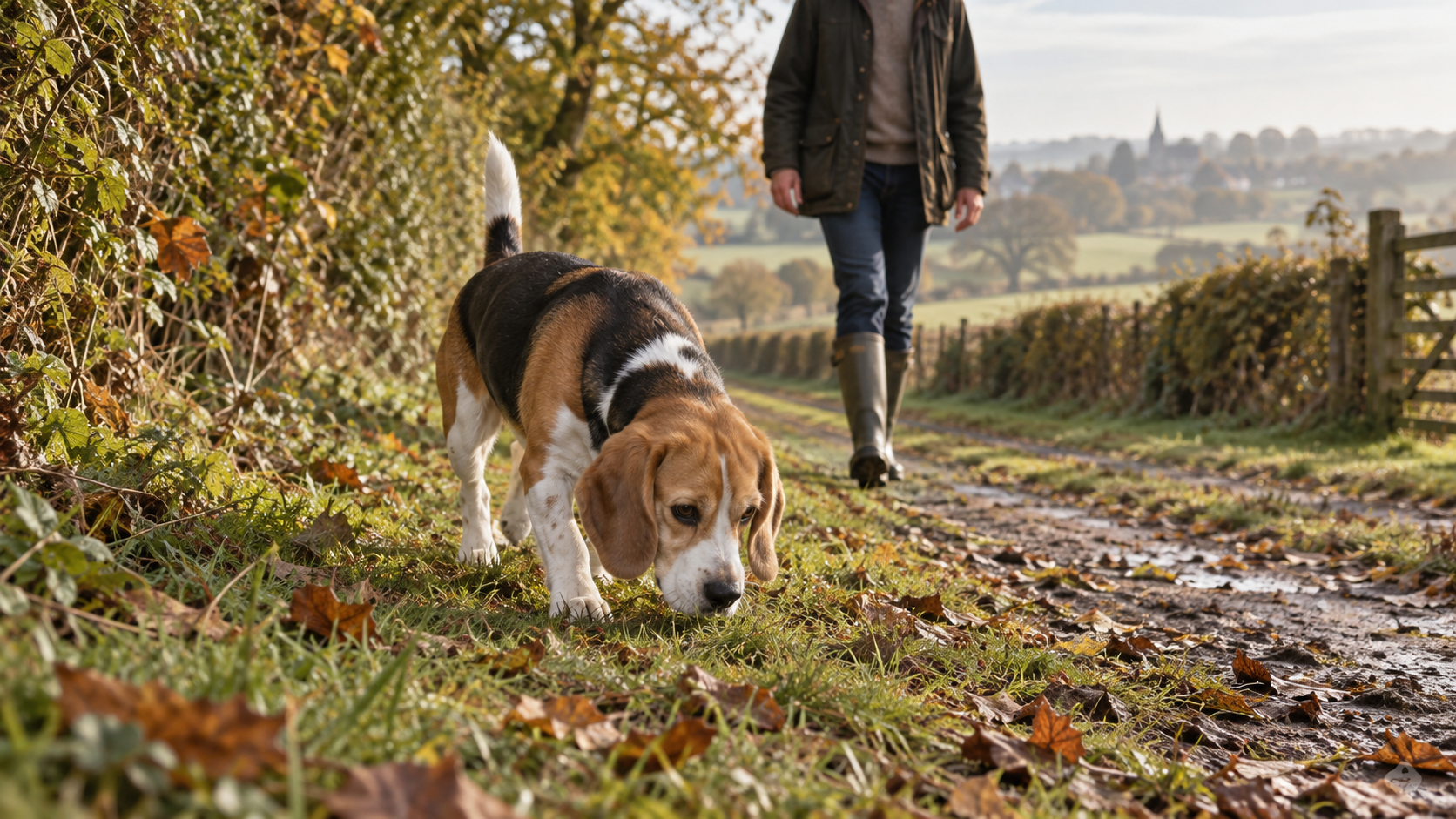
Put a Beagle on a familiar path and you may see the past surface in seconds: nose down, ears swinging, pausing over a scent that no human can see. The dog may look like a cheerful household companion, but the compact body and patient determination were shaped for a practical task—following hare and rabbit trails while people moved on foot.
So where did the Beagle come from? The honest answer is layered. Small scent hounds are described long before the modern breed was standardized, yet the exact ancestry is not fully documented. This guide follows the evidence from early references to English pack work, American breed clubs, and the individual dog resting beside you today.
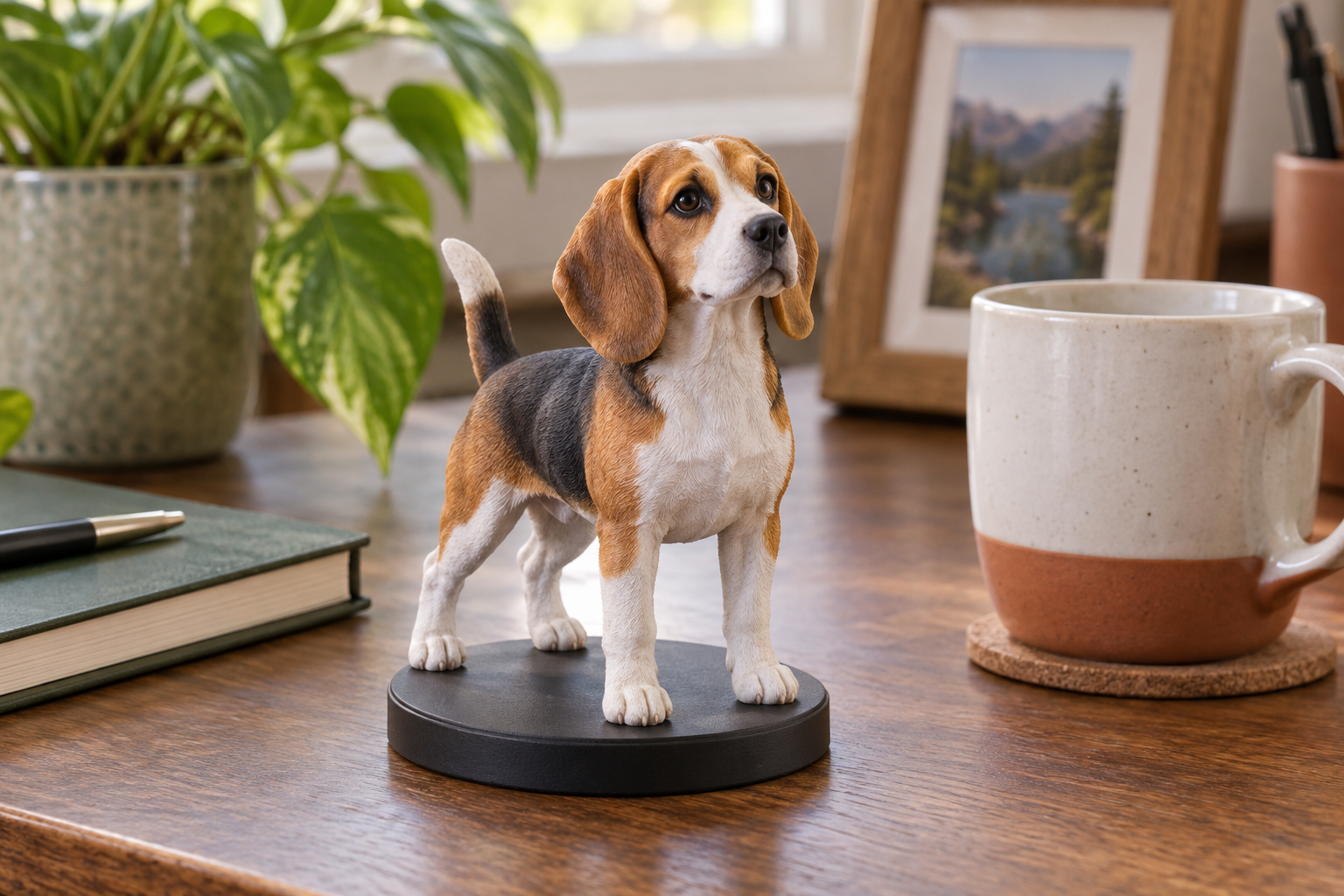
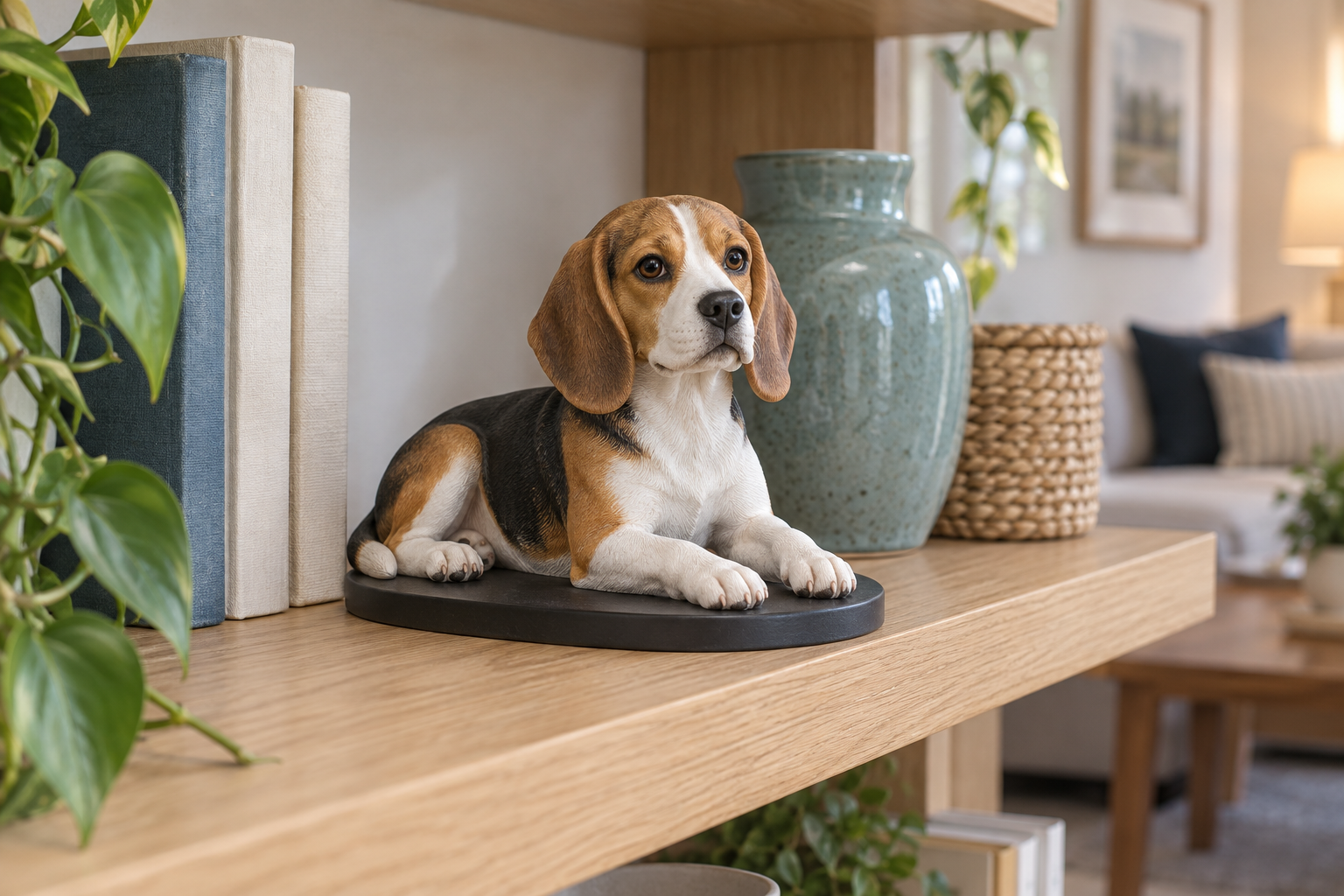
If your Beagle’s tilted head, curious nose, or familiar expression is part of what makes them unforgettable, those details can also become the starting point for a keepsake. You can see how a favorite Beagle photo can become a full-color 3D sculpture or keep reading for the breed history behind those familiar traits.
Quick takeaways
- The Beagle is treated by major canine standards as a British scent hound, but its earliest ancestry is not a clean, fully documented family tree.
- Its central historical job was to follow hare or rabbit scent while people traveled on foot, often with other hounds.
- Very small and wirehaired Beagle varieties appear in historical descriptions. “Pocket Beagle” should not be read as a simple promise about a modern puppy.
- English pack work, 19th-century clubs and field trials, and American breed development helped shape the modern breed’s public identity.
- History is useful context for a Beagle’s nose, stamina, and sociability. It is not a personality test for an individual dog.
What Beagle history can—and cannot—tell us
Breed history is not the same thing as a pedigree. A pedigree traces particular dogs and their recorded descendants. A history of a breed also includes working roles, regional types, club decisions, changing standards, and the names people used for dogs before a modern registry drew firm boundaries.
That distinction matters with the Beagle. The National Beagle Club of America describes the breed’s origin as obscure, while the FCI standard identifies Great Britain as the breed’s origin and cautiously describes a development from larger foxhound-type stock. Those statements are not necessarily in conflict: one describes the modern breed’s recognized home, while the other warns us not to mistake a later standard for a complete record of ancient ancestry.
The same care applies to behavior. A peer-reviewed 2022 Science study found that breed was a limited predictor of an individual dog’s behavior, while some broad breed-linked tendencies could still be detected. The useful conclusion is not that history is irrelevant, or that it writes a dog’s personality in advance. It is that a breed gives you a starting context—and the individual dog gives you the evidence.
A useful working timeline therefore looks like this:
| Period | What the evidence supports | What remains uncertain |
|---|---|---|
| Ancient and early British references | Small hounds associated with following hare or rabbit appear in old written or historical summaries. | Those references do not describe a modern registered Beagle or prove an unbroken pedigree. |
| By the 15th century | The Beagle was established in England as a small pack hound, and the name appears in English writing. | The exact point at which a recognizable type became the modern breed cannot be reduced to one date. |
| 18th and 19th centuries | Beagles continued in hare-hunting and became increasingly organized through packs, clubs, shows, and field trials. | Regional dogs and standards changed; “the Beagle” was not identical in every place and period. |
| 20th century to today | The breed became a familiar companion and cultural symbol while retaining a scent-hound identity. | A public image—whether a painting, cartoon, or advertisement—cannot predict an individual dog’s needs. |
Before the modern standard: a long scent trail
The oldest part of the story is also the part that needs the most humility. The National Beagle Club notes references to small hare-hunting dogs in Greece around 400 BC and in ancient Britain around 200 AD. The AKC likewise summarizes early small pack-hounds used for hare and rabbit. These references make the working idea old; they do not let us draw a straight line from one ancient dog to a modern Beagle.
The word itself has no universally settled explanation. The National Beagle Club presents a possible Celtic connection to a term meaning “small,” while other historical accounts discuss additional possibilities. A careful article should preserve that uncertainty instead of turning one attractive word origin into a fact.
The job that shaped the Beagle
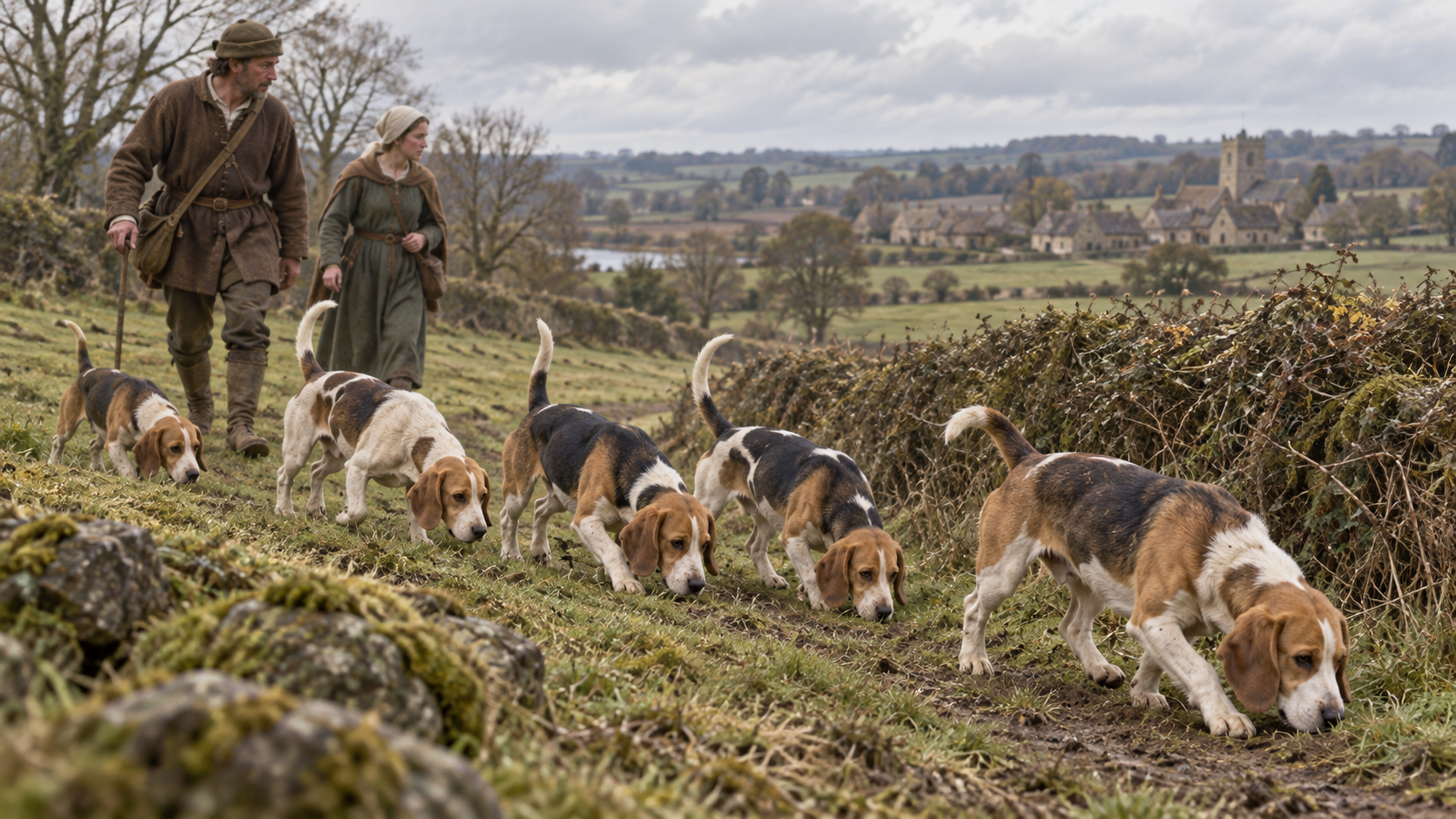
The clearest thread through Beagle history is function. The FCI standard classifies the Beagle as a scent hound and describes a dog developed to hunt hare with people on foot. The Royal Kennel Club similarly calls it the smallest of the British pack hounds and explains why a smaller, foot-following hound suited people who could not keep up with larger scenthounds on horseback.
That job rewarded a combination that still feels familiar: a compact, sturdy body; stamina rather than a need for a fast finish; determination to stay with an interesting trail; and the ability to work in company. The point was not to create a decorative silhouette and then find it a purpose later. The purpose helped shape the silhouette.
This is also why “small” should not be confused with “delicate” or “low energy.” The historical Beagle was small enough to follow on foot, but the work demanded persistence. A modern dog may express that inheritance by turning a five-minute walk into a detailed investigation of a hedge, pavement edge, or patch of grass.
Pocket and singing Beagles: real history, easily misunderstood
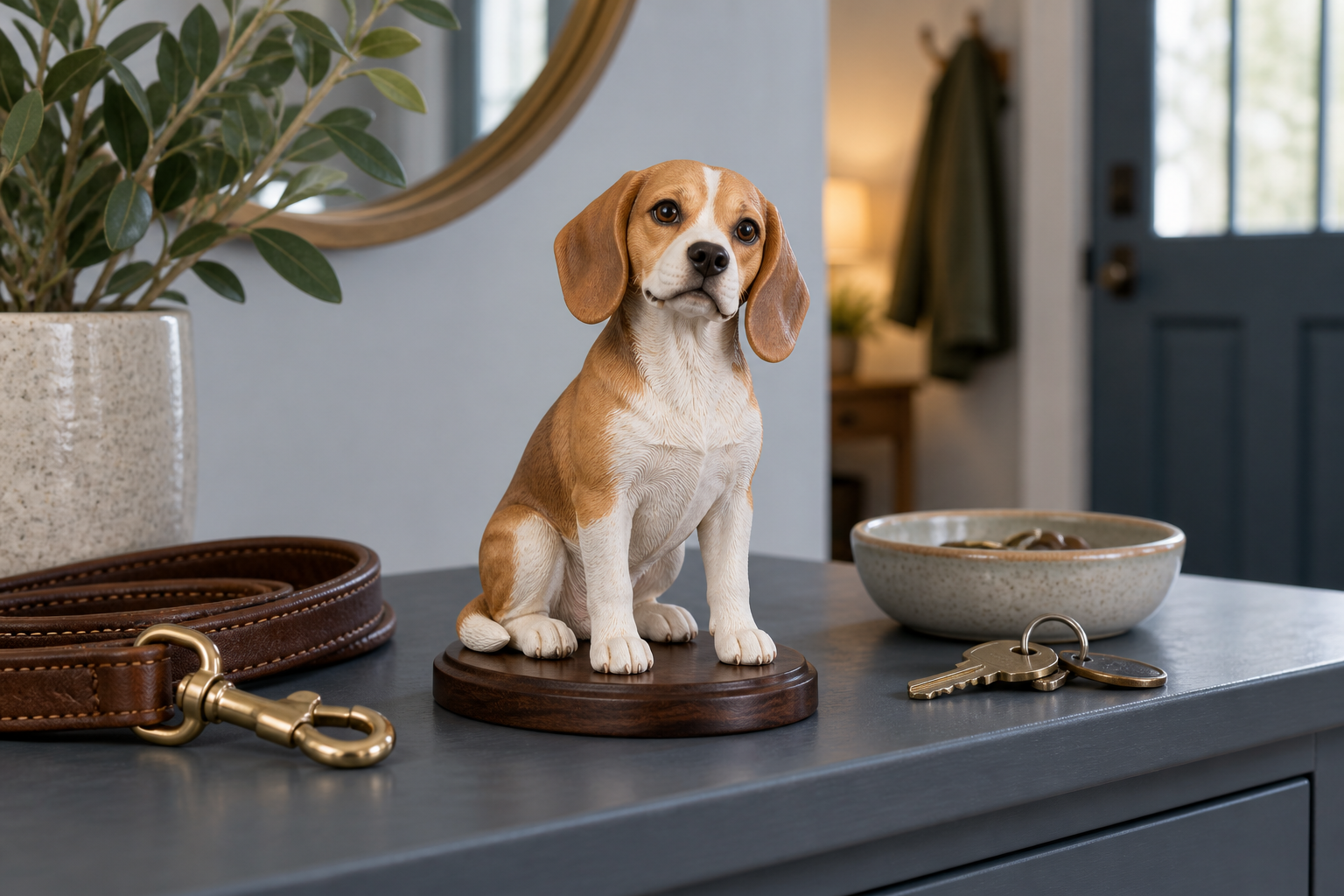
Historical sources describe Beagles that were much smaller than the dogs most people picture today. The FCI standard mentions wirehaired Beagles during the reigns of Henry VIII and Elizabeth I, including some said to be small enough to carry in a hunting jacket. The AKC also records miniature or “pocket” descriptions connected with Elizabeth I.
Those details are delightful, but they need a boundary. Historical labels were not always used like modern breed categories. A past miniature variety does not guarantee a particular adult height, health profile, or temperament in a dog advertised today as a Pocket Beagle. It is better to treat the term as a chapter in the breed’s history than as a shortcut around careful individual assessment.
The old “singing Beagle” description belongs to the same world of pack work and lively voices. It helps explain how people experienced Beagles in groups, but it should not become a stereotype that every Beagle must be noisy or every quiet Beagle is somehow less authentic.
When larger foxhounds rose, Beagles remained
By the middle of the 18th century, the National Beagle Club says hare hunting as an aristocratic sport had been displaced in many circles by foxhunting with larger, faster hounds. That could have pushed the smaller hound out of fashion. Instead, Beagle packs remained useful to farmers and small landholders in parts of England, Wales, and Ireland, where following a hare on foot still fit the landscape and the people moving through it.
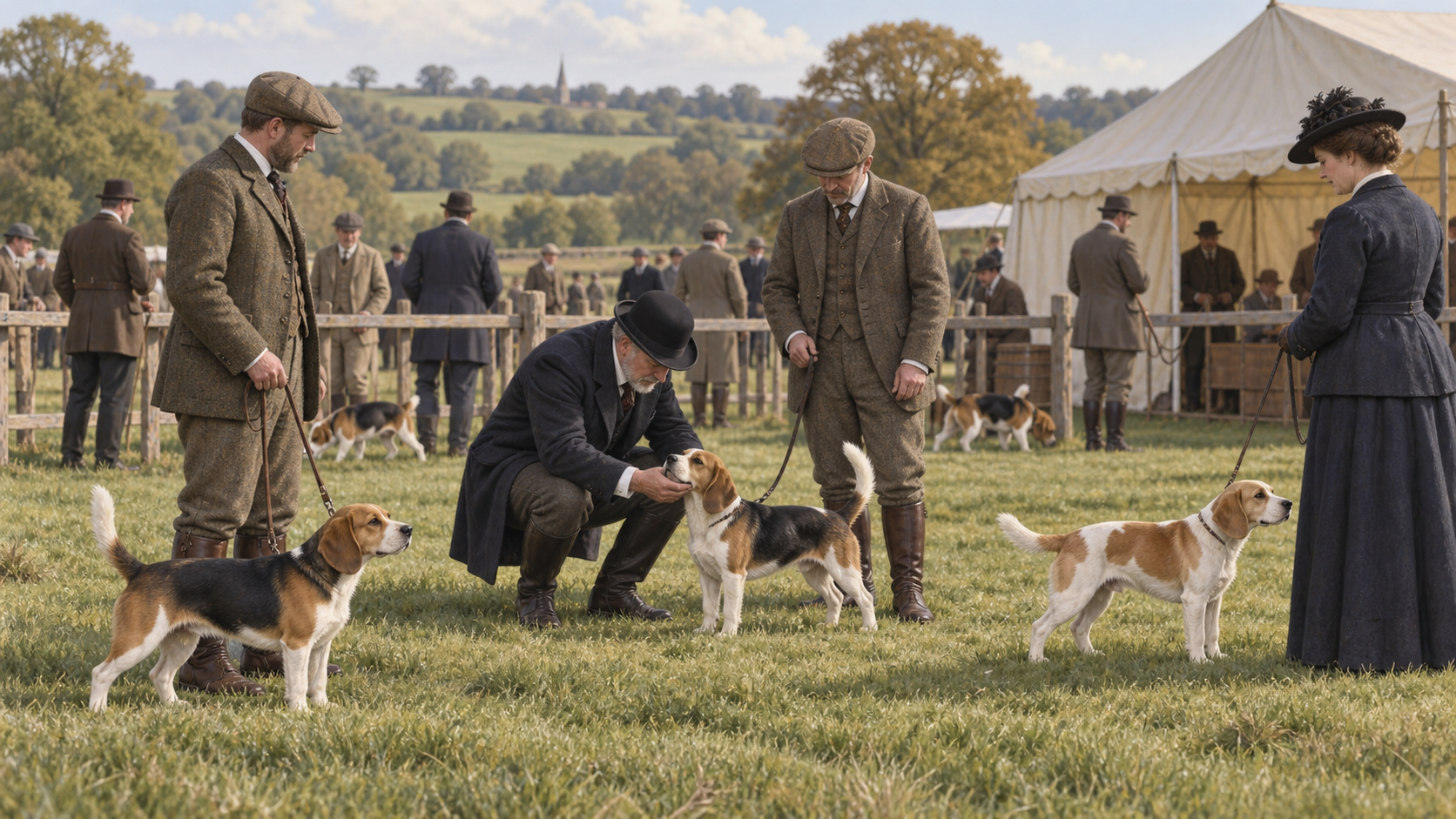
This is one of the most revealing turns in Beagle history: survival did not depend on one royal household or one show-ring ideal. A working relationship continued in ordinary rural communities. By the 19th century, interest grew in producing a dog that was both good-looking and useful, bringing function and presentation into the same conversation.
The American chapter: clubs, imports, and field trials
Scent hounds traveled with English settlers, although the record of the earliest American Beagles is incomplete. The National Beagle Club identifies General Richard Rowett of Illinois as an important 19th-century importer who brought British hounds to the United States around 1870. His dogs helped strengthen interest in the breed, but the club’s broader history makes clear that later imports, breeders, clubs, and standards all contributed to the modern American picture.
The AKC records a Beagle named Blunder as the first of the breed registered there, in 1885. A few years later, the first advertised US Beagle field trial in Hyannis, Massachusetts, on November 4, 1890, drew eighteen entries. These dates are not the birth of the Beagle. They mark something different: the point at which a long working tradition was becoming more formally organized and publicly recorded in the United States.
Early American Beagles were expected to bridge two worlds. They could be evaluated in a show setting and still be understood as hounds whose value included the ability to work. That dual purpose is why the breed’s history cannot be told only through portraits or only through hunting records. Both the visible outline and the job behind it mattered.
From working hound to familiar household companion
In the 20th century, the Beagle became recognizable far beyond fields and club grounds. The AKC notes that Norman Rockwell often chose Beagles for scenes of American home life, and that Charles M. Schulz’s Snoopy made the breed familiar to generations of readers. That cultural visibility helped the Beagle feel like a dog people already knew before they met one.
But recognition is not the same as understanding. A fictional character can make a breed memorable; a painting can make it feel at home in a family scene. Neither can tell you whether the particular Beagle beside you needs a slower walk, more scent-based engagement, a quieter greeting, or simply time to settle.
What the history is useful for today
A breed history should change the questions you ask, not hand you a fixed answer. When a Beagle pauses to investigate a scent, the working background gives that moment context. It does not prove the dog is stubborn, trying to disobey, or displaying one universal Beagle personality.
| Historical clue | What you might notice | A more useful reading |
|---|---|---|
| Scent-hound work | A walk becomes a series of stops, turns, and close examinations. | Allow safe, unhurried exploration when the setting permits; the nose is part of how this dog meets the world. |
| Pack background | Your Beagle may seek company or use a person as a reference point. | Value companionship without assuming every dog wants the same amount of contact. |
| Stamina and persistence | A small body may still bring a large appetite for activity and investigation. | Look for purposeful, age-appropriate ways to engage the individual dog rather than relying on size as a shortcut. |
| Long standardization history | Two Beagles can share a breed label while differing in shape, voice, confidence, and routine. | Use breed history as a lens, then observe the dog in front of you. |
The Royal Kennel Club notes that Beagles benefit from regular exercise, companionship, and secure surroundings because an interesting scent can pull attention outward. That is practical context, not a diagnosis or a promise about every dog. A Beagle is both a member of a historical breed and an individual shaped by age, health, experience, environment, and relationship.
When a breed’s history becomes part of your own
The history of the Beagle explains why a familiar face can carry so much character: the nose that takes the long way home, the ears that lift at a distant sound, the pause before following one more scent. Yet the details that stay with you are personal, not generic. They belong to the dog who waits by your door, curls up after a walk, or turns an ordinary route into a shared ritual.
If one of those details deserves a place beyond the screen, Tiny Presence can use a favorite existing photograph as reference for a custom full-color pet sculpture. The history gives the breed its familiar outline; your own memories give the individual dog its meaning.
Frequently asked questions
Is the Beagle a British breed?
Yes, major breed standards treat the Beagle as a British breed, and The Kennel Club describes it as the smallest of the British pack hounds. That modern classification does not mean every early ancestor is fully documented or that the breed appeared in one single year.
What were Beagles bred to do?
Beagles were developed as small scent hounds for following hare and rabbit, often in packs and with people moving on foot. Their history helps explain a strong interest in scent, persistence, and shared activity, but it does not dictate every modern dog’s behavior.
Were Pocket Beagles a separate breed?
Historical sources describe very small Beagles and use terms such as miniature or pocket. Those historical varieties should not automatically be treated as the same thing as a modern marketing label, nor as a guarantee about an individual dog’s adult size or needs.
Did Beagles always look exactly as they do today?
No. Regional types, working demands, imports, clubs, and changing standards influenced the breed over time. The modern Beagle has a recognizable standard, but old drawings, descriptions, and names should not be read as photographs of one unchanging form.
Does Beagle history predict personality?
It offers context, not a verdict. A Beagle’s working background can make scent and companionship useful things to notice, while the individual dog’s age, health, learning history, environment, and preferences still matter. A peer-reviewed genomics and behavior study also cautions against treating breed tendencies as universal rules. If behavior changes suddenly or concerns you, a veterinarian or qualified behavior professional is the appropriate source of personal advice.
A history worth carrying forward
The Beagle’s story is not a straight march from an ancient hound to a cartoon icon. It is a layered record of small scent hounds, people on foot, rural packs, changing standards, American clubs, and households that made room for a dog with somewhere else to follow. The most honest way to live with that history is to let it sharpen your attention while leaving room for the individual Beagle in front of you.
For more sourced pet stories and breed histories, continue through the Tiny Presence Blog.