You say a familiar word, and your dog angles their head as if the sentence has just become a puzzle. One ear rises, the other drops, the eyes stay on you, and the moment feels almost conversational. So why do dogs tilt their heads?
Usually, a brief tilt is a normal response to an interesting sound, familiar speech, or a cue your dog is trying to interpret. It may reflect attention or sound-location work, but it is not a reliable test of intelligence or proof that your dog understood every word. A tilt that is sudden, persistent, or paired with balance and eye-movement changes is different: it deserves a veterinary conversation.

Quick answer: Dogs may tilt their heads to pay closer attention, adjust how they receive a sound, or work out what a familiar word or visual cue means. The behavior is most reassuring when it is brief and your dog quickly returns to normal. A fixed one-sided tilt or a tilt with stumbling, circling, vomiting, unusual eye movements, pain, or disorientation should not be explained away as “just cute”—contact a veterinarian.
Why do dogs tilt their heads when you talk?
There is no single explanation that applies to every dog. A speaking voice contains pitch, rhythm, emphasis, and familiar words. When something in that stream catches your dog’s attention, changing the angle of the head may help them gather more information. The ears and ear flaps can change the way sound reaches each ear, while the new angle may also help the dog see your face or mouth more clearly. These are plausible explanations, not a proven formula for every individual tilt.
The important clue is context. Does the tilt appear after your dog’s name, a favorite phrase, a new sound, or a gesture? Does it disappear when the sound stops? A short response followed by relaxed movement, a normal walk, and an ordinary meal is generally more reassuring than the angle itself.
Dogs also learn patterns. If a word regularly predicts a walk, toy, meal, or interaction, the word is meaningful because of the whole routine around it. That does not mean a head tilt translates a sentence word for word. It means your dog may be sorting sound, sight, memory, and expectation at the same time.
Does a head tilt mean a dog understands you?
It can mean your dog is engaged, but it cannot prove what they understand. That distinction matters because the internet often turns a charming gesture into a claim about exceptional intelligence.
A peer-reviewed Animal Cognition study observed 40 dogs during object-label knowledge tests. The dogs that had learned the names of particular objects tilted frequently in the relevant naming condition, while the control comparison tilted far less often. The researchers interpreted this as consistent with increased attention and processing of a meaningful stimulus. They did not establish that a head tilt is a universal language signal, and the study involved a specific trained task.
A 2025 study in Animals tested 103 dogs with familiar human speech in several conditions. Tilting was more common in the more communicative condition, and the researchers reported direction and sex differences. That adds evidence that the gesture can be connected with how dogs process communication, but it still does not give owners a decoding chart. A dog who never tilts may be attentive; a dog who tilts may still be uncertain; neither response alone measures intelligence.
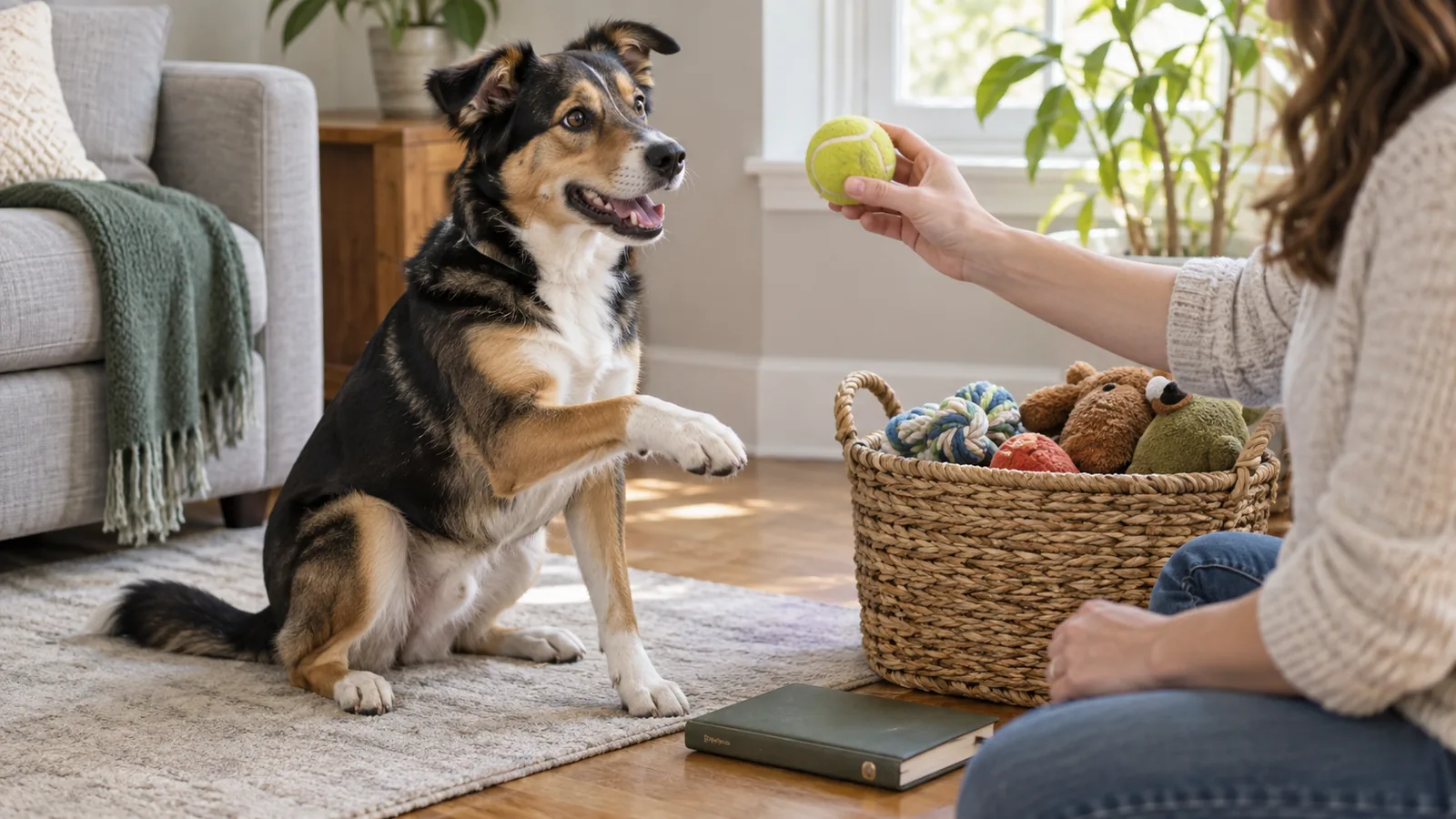
What does a dog head tilt tell you about the moment?
Instead of asking “What does this gesture always mean?”, ask “What changed right before it?” A quick observation can make the behavior easier to read:
- The trigger: Was it a spoken word, a high-pitched sound, a visual cue, or something outside the room?
- The duration: Did the head return to its usual position within seconds, or is the tilt still present later?
- The rest of the body: Are the feet steady, the eyes comfortable, and the posture relaxed, or is your dog leaning, circling, or struggling to stand?
- The pattern: Does it happen occasionally on either side, or is one ear lower most of the time?
These observations are more useful than trying to assign a personality label. You can also record a short video for your veterinarian if the behavior is new or difficult to describe. Video preserves the trigger and the dog’s whole posture, not just a still image of the head.
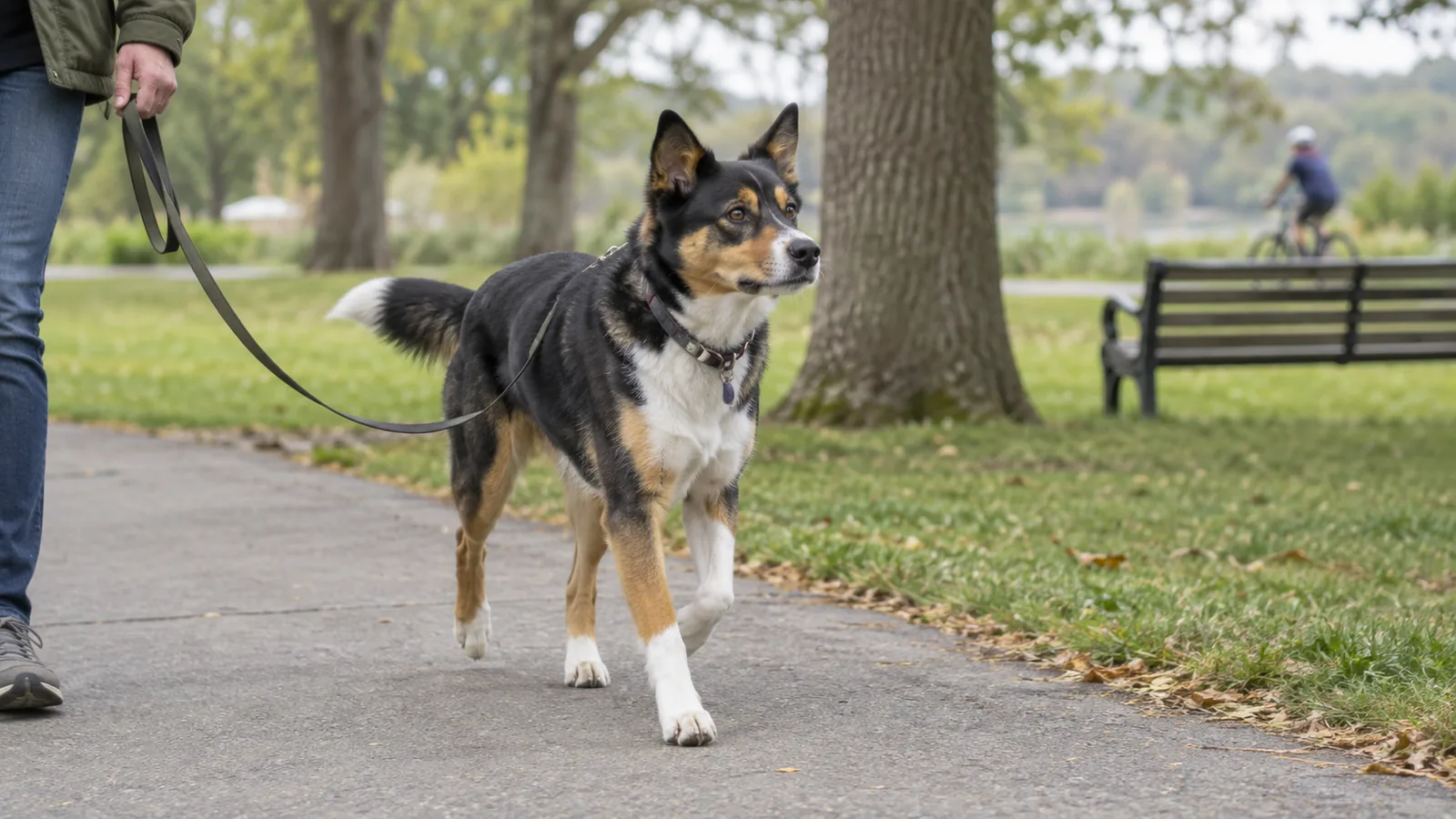
When is a dog tilting their head a health concern?
A persistent tilt is not the same as a brief listening gesture. Veterinary references use “head tilt” for a posture in which one ear is held lower than the other; it can be associated with problems affecting balance systems, among other causes. Only an examination can identify what is happening in an individual dog.
Contact your veterinarian promptly if the tilt stays in place, keeps returning without an obvious sound trigger, or appears with signs such as leaning, stumbling, falling, circling, vomiting, disorientation, pain, unusual eye movements, ear discomfort, or difficulty hearing. If the change is sudden or your dog cannot stand or walk safely, call a veterinary service for urgent triage and keep the dog away from stairs while you arrange help.
Do not try to straighten the head, put drops in the ear, or give medication based on an online guess. Note when you first saw the change, whether it is always on the same side, and what other symptoms appeared. That information can help the clinical team decide what to examine.
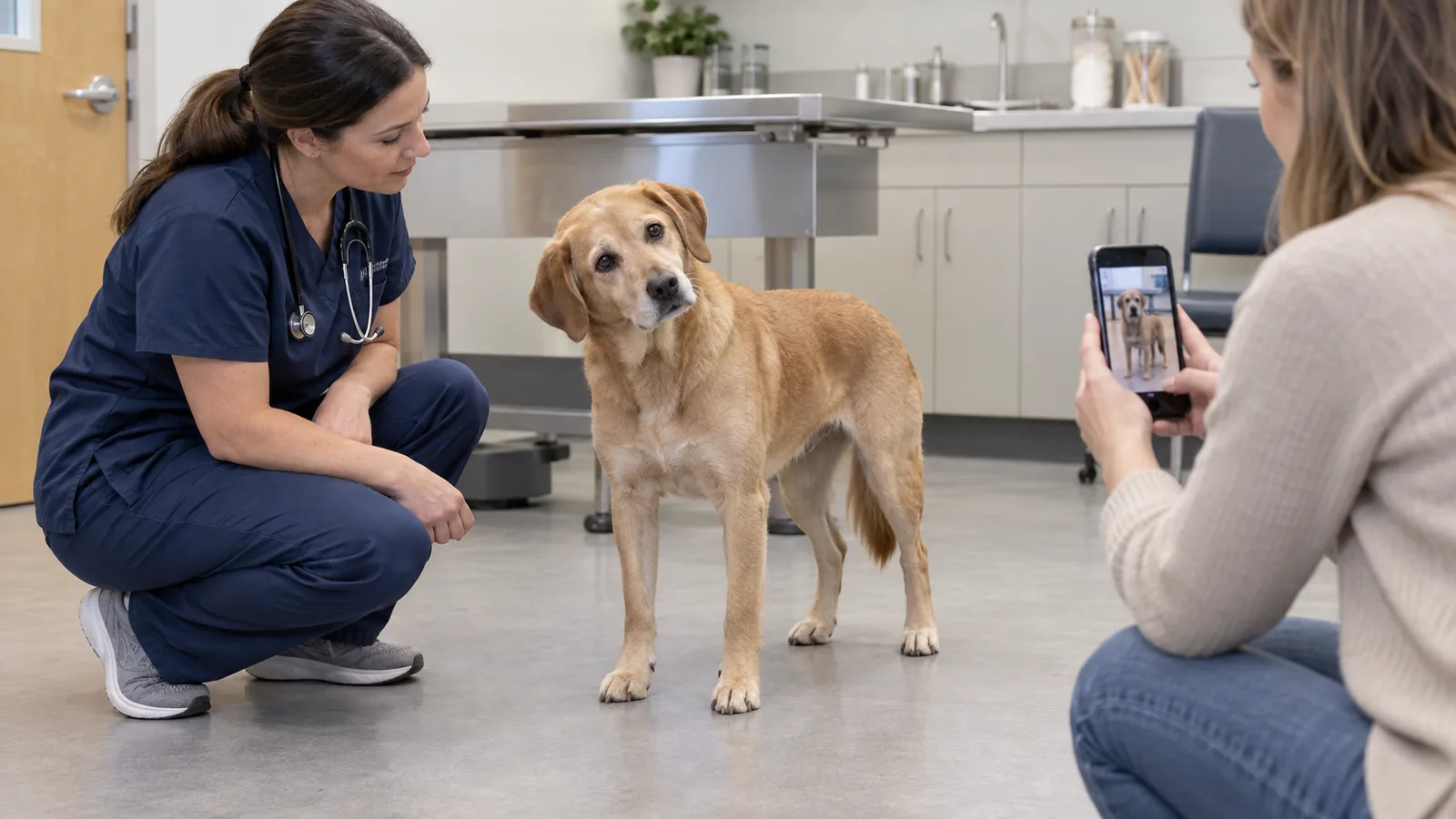
How should you respond to a normal head tilt?
If the tilt is brief and your dog is otherwise comfortable, you do not need to test it or repeat the sound until the dog performs it again. Speak normally, let the moment end, and reward calm engagement if that fits your usual training routine. Avoid turning the gesture into a performance: repeated startling or teasing can make a dog anxious and tells you less about their natural behavior.
You can make communication easier by pairing important cues with a consistent word, hand signal, and outcome. Give your dog time to respond, notice whether the environment is distracting, and stop when the dog seems tired. Clear, repeatable interaction is more useful than trying to produce a photogenic tilt.
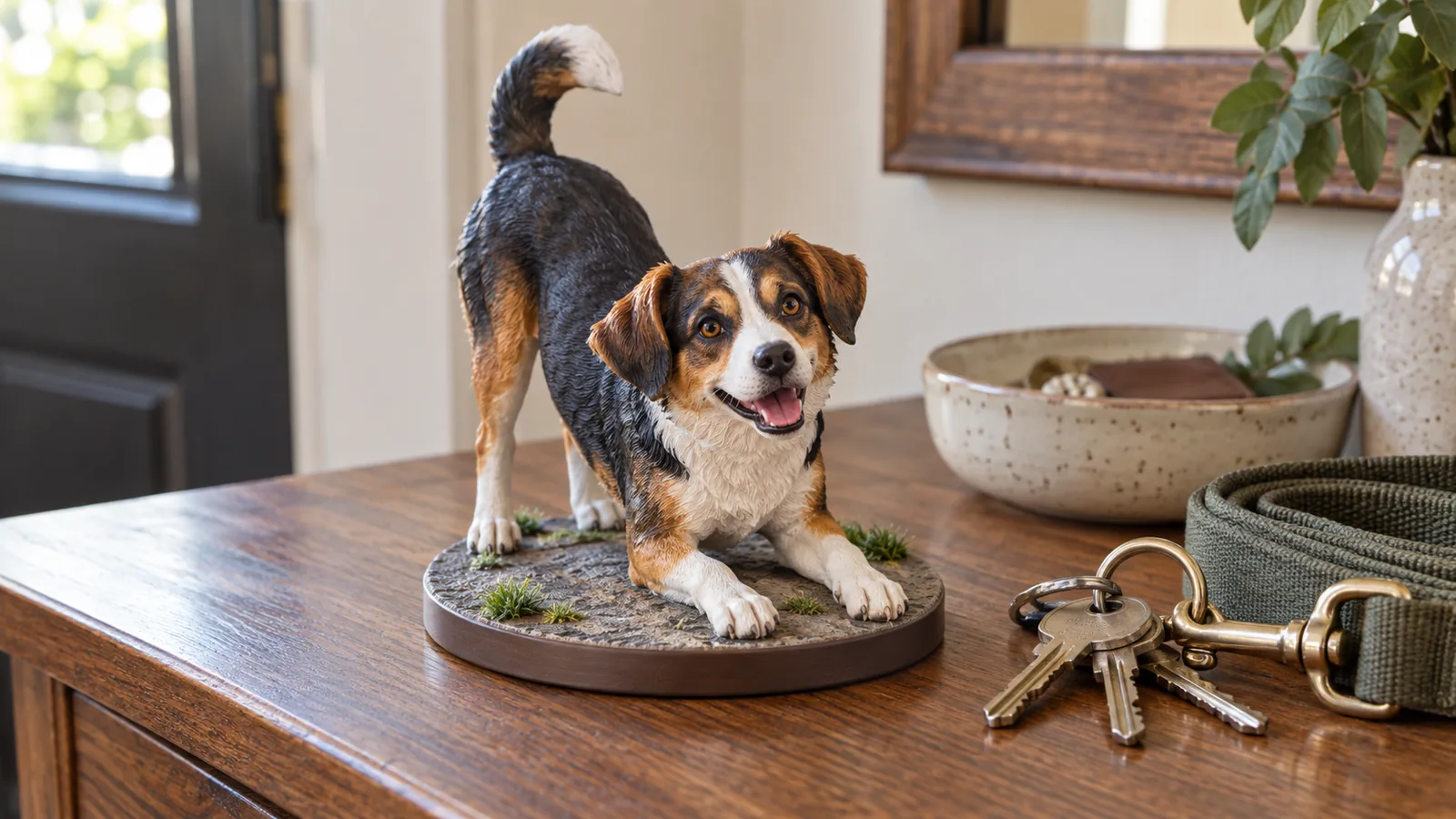
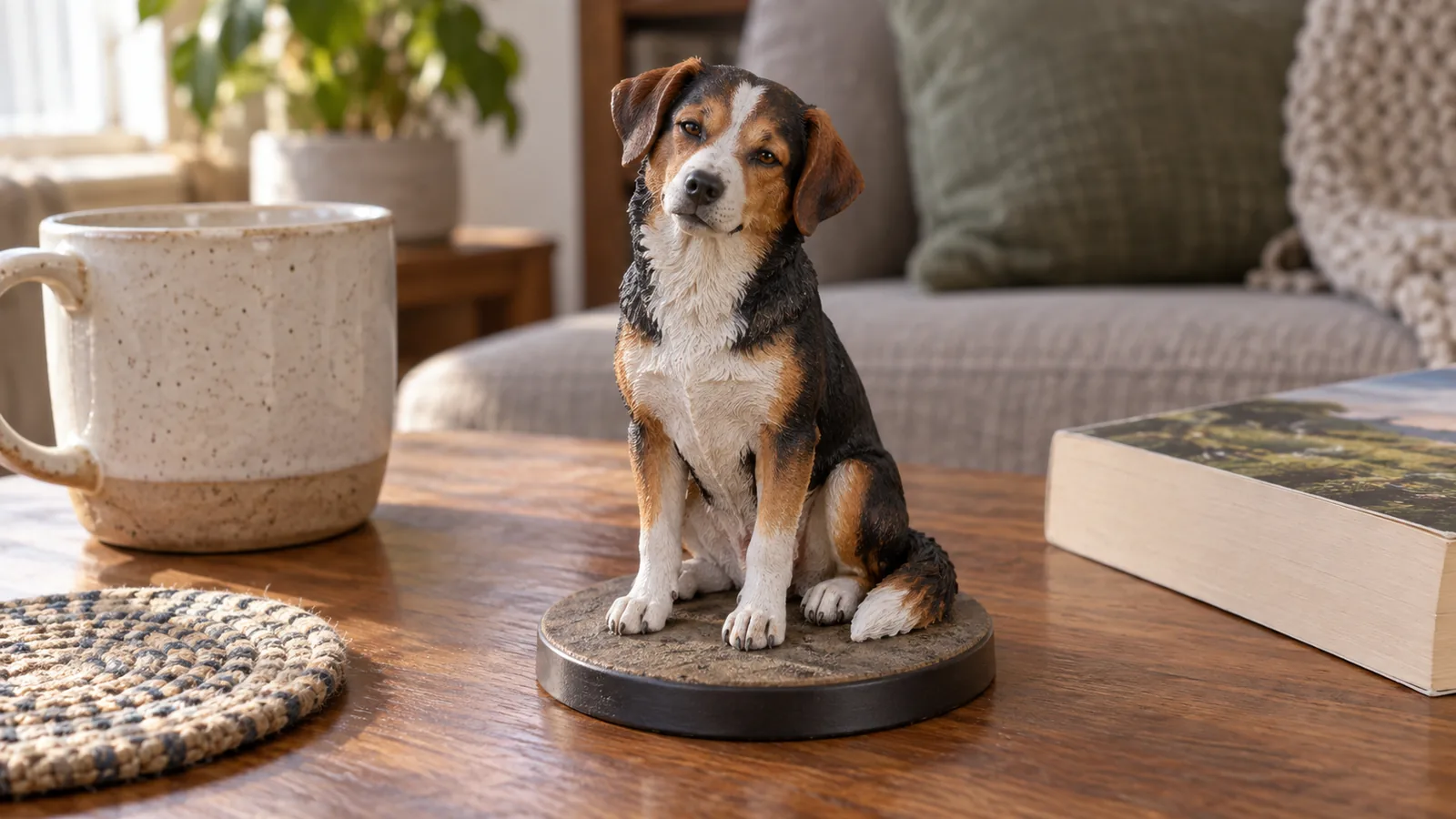
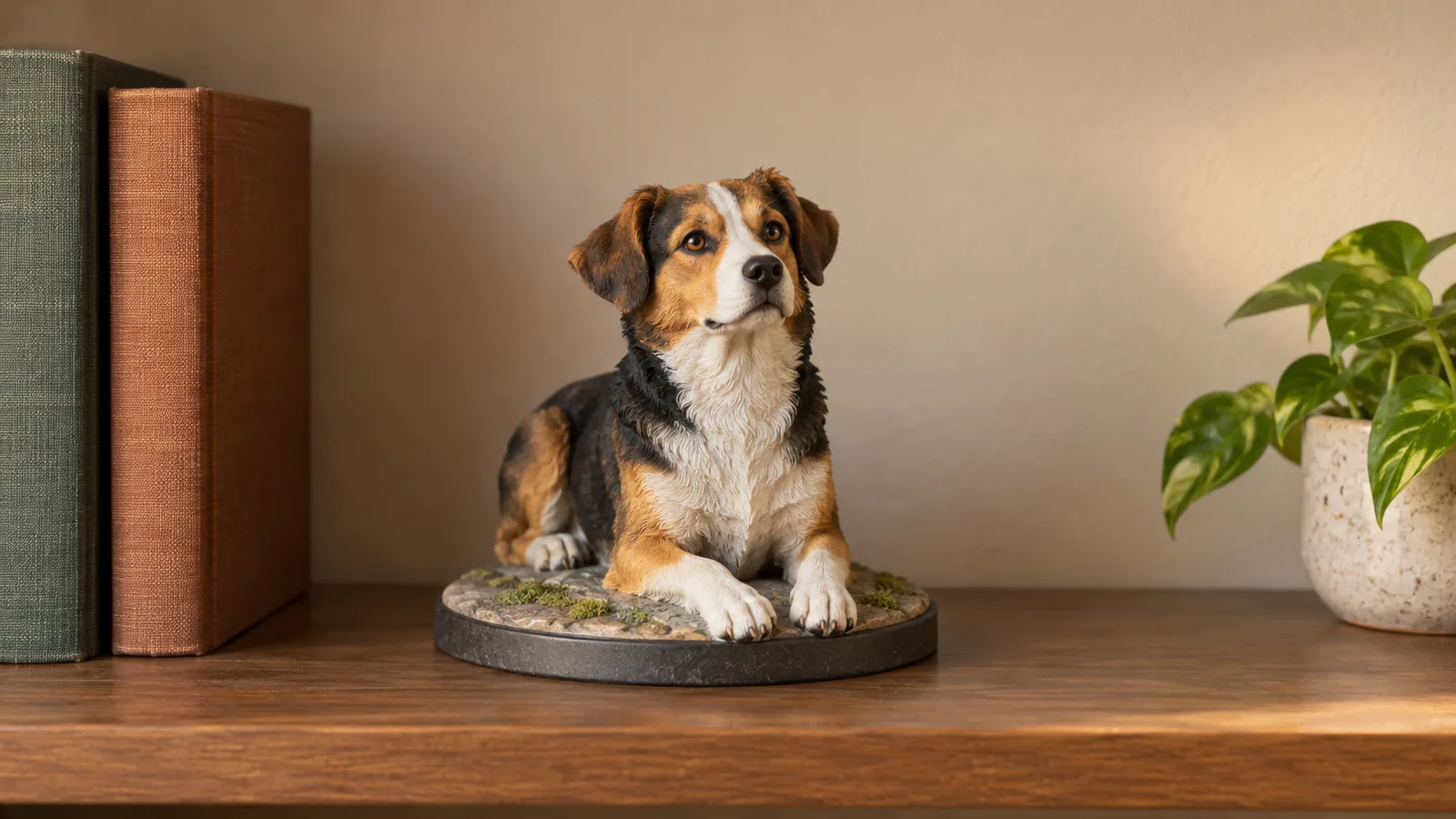
A meaningful pose can become a personal keepsake
The details that make a dog memorable are often ordinary: the way they pause at a particular sound, lift one paw toward a toy, or settle into a favorite resting position. If you want to preserve a specific expression or body-language moment, Tiny Presence’s custom pet sculpture page offers a product path for turning a chosen reference into a keepsake. The choice of pose is personal; the images in this article are generated editorial illustrations, not customer commissions or delivery proof.
The takeaway
Why do dogs tilt their heads? Often because a sound, word, or visual cue has become worth closer attention. Research supports a connection with meaningful communication in specific contexts, but the gesture is not a universal translation of “I understand.” Read it with the trigger, duration, and whole body in view.
The practical boundary is simple: a brief tilt followed by normal behavior is usually a moment to observe, not a puzzle to force. A persistent or sudden tilt—especially with balance problems, vomiting, unusual eye movements, pain, or disorientation—is a reason to contact a veterinarian.
Reader questions
Why does my dog tilt their head when I say their name?
Your dog’s name may predict attention, eye contact, a walk, or another familiar interaction. The tilt may be part of listening and expectation, but it does not prove that your dog understood every word in the surrounding sentence.
Is a dog head tilt always a sign of intelligence?
No. Studies have found more tilting in some trained or communicative tasks, but a head tilt is not a universal intelligence test. The dog’s context, learning history, hearing, visual access, and body language all matter.
How long is too long for a dog to hold a head tilt?
There is no safe universal timer for an individual dog. If the posture is persistent, unexplained, recurrent without a trigger, or paired with balance, eye, ear, pain, vomiting, or orientation changes, contact a veterinarian promptly rather than waiting for a fixed number of hours.
Should I train my dog to tilt their head?
You do not need to. If you use a positive-reinforcement trick, keep it brief, avoid startling the dog, and do not reward a posture that could be a sign of discomfort. Any new persistent tilt should be evaluated instead of trained.
For more evidence-led pet stories and everyday guides, continue through the Tiny Presence Blog.
Reader sources
- Animal Cognition: An exploratory analysis of head-tilting in dogs
- Animals: What Does That Head Tilt Mean?
- Merck Veterinary Manual: The Neurologic Examination of Animals
- Merck Veterinary Manual: The Neurologic Evaluation of Dogs
- PetMD: Head Tilt in Dogs
- American Kennel Club: Why Do Dogs Tilt Their Heads?
- VCA Animal Hospitals: Why Dogs Tilt Their Heads