Your dog notices the pumpkin before you finish unloading the groceries: nose lifted, eyes fixed, waiting to see whether the orange thing on the counter belongs to them. The short answer is that many healthy dogs can have a little plain, cooked pumpkin. The harder question is what “pumpkin” means on the label. Pure pumpkin, pie filling, a spiced latte, a weathered porch decoration, and a sugar-free baked good are not interchangeable. This guide explains which forms are generally suitable, why pumpkin is not a cure-all for stomach trouble, what to check before sharing, and when the safest answer is to call your veterinarian.
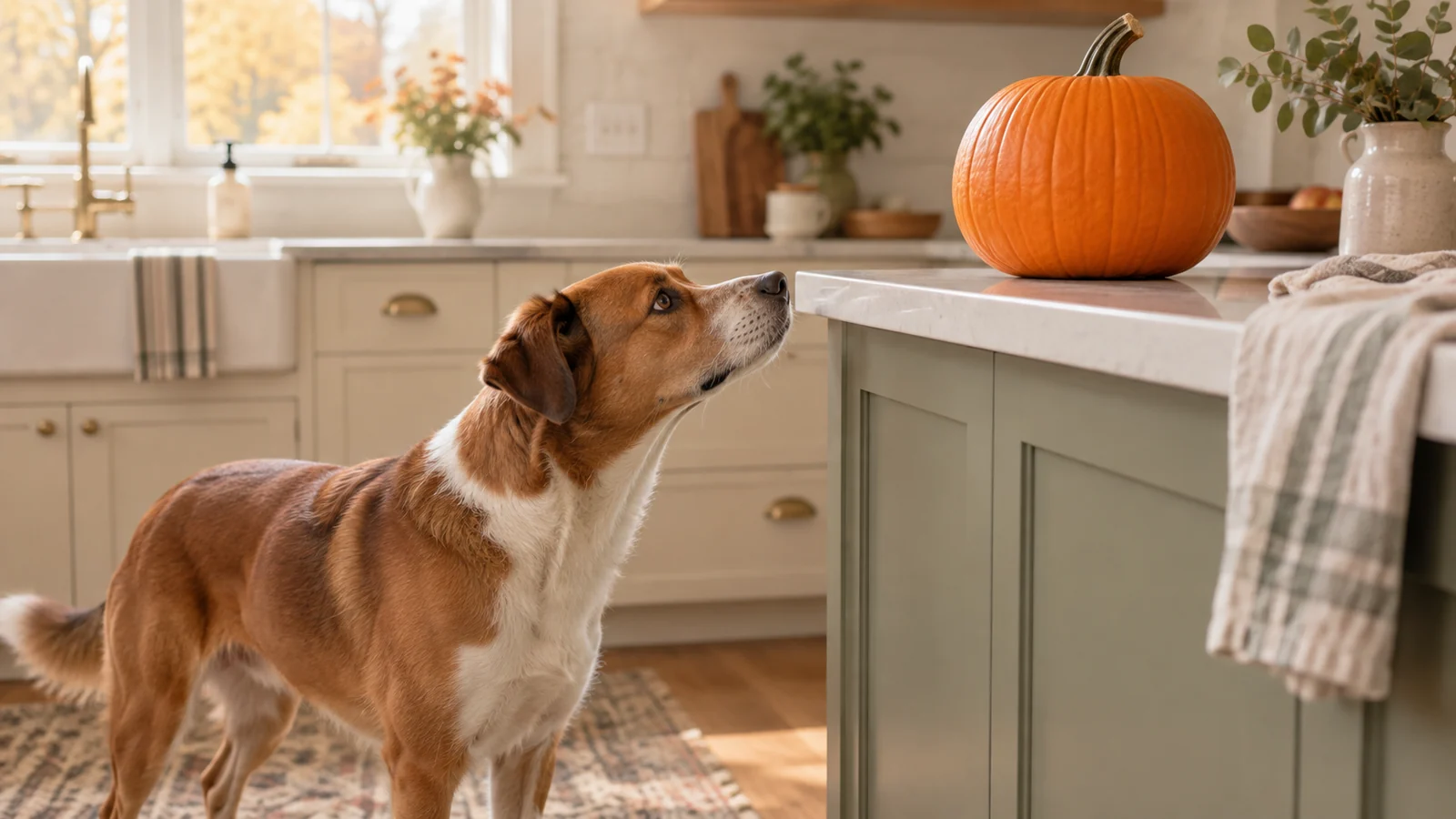
Can dogs eat pumpkin? The short answer
Plain, cooked pumpkin or 100% pure canned pumpkin can be an occasional extra for many healthy dogs. The simplest version has no sugar, salt, butter, oil, spice, or sweetener. The ASPCA Animal Poison Control Center includes cooked or canned pumpkin among foods that can be shared in small amounts and advises leaving seasoning out.
Pumpkin pie, pie filling, breads, lattes, and other human treats are different foods. They can bring added fat, sugar, dairy, spices, or sweeteners that a dog does not need. If a product is sugar-free or reduced-sugar, check the ingredients for xylitol. The U.S. Food and Drug Administration warns that xylitol is toxic to dogs and advises immediate veterinary or emergency help after suspected ingestion.
Small details change the whole answer. Tiny Presence brings the same attention to coat markings, posture, and expression when creating a custom pet sculpture from photos; in the kitchen, the important detail is the ingredient list.
Use the food form, not the color, to decide
An orange puree can be plain pumpkin, sweetened pie mix, baby food with extra ingredients, or part of a flavored dessert. Start with what the food actually is.
| Form | Practical decision | Why |
|---|---|---|
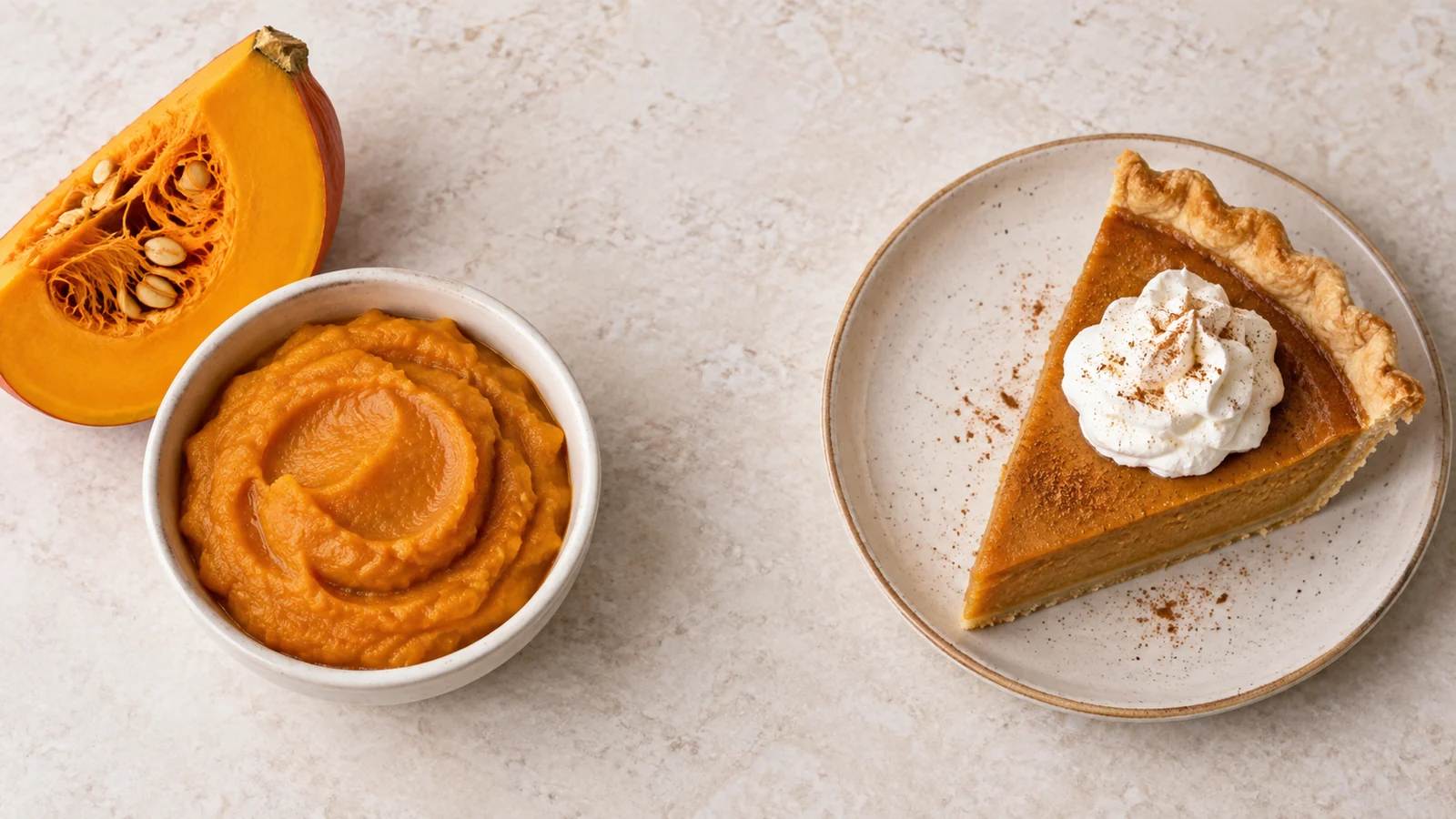
| Plain cooked pumpkin flesh | Often suitable as a small occasional extra for a healthy dog | It can be served soft, cooled, and unseasoned after the skin, hard rind, and stem are removed. |
| 100% pure canned pumpkin | Often suitable if the ingredient list is plain | The front of the can is less useful than the ingredient panel. Look for pumpkin without sugar, salt, spice, or sweetener. |
| Raw pumpkin, rind, stem, or large hard pieces | Skip | Hard or awkward pieces can be difficult to chew and can create choking or obstruction concerns. |
| Pumpkin pie or pie filling | Do not share | It is a dessert or baking mixture, not plain pumpkin, and may contain sugar, fat, dairy, spice, or other unsuitable ingredients. |
| Pumpkin-spice drinks, breads, or sugar-free baked goods | Do not share | The full recipe matters. Xylitol in a human product is an emergency for a dog. |
| Old carved or moldy pumpkin | Keep inaccessible | Mold and large decorative pieces turn a food question into a safety problem. |
How to check canned pumpkin in under a minute
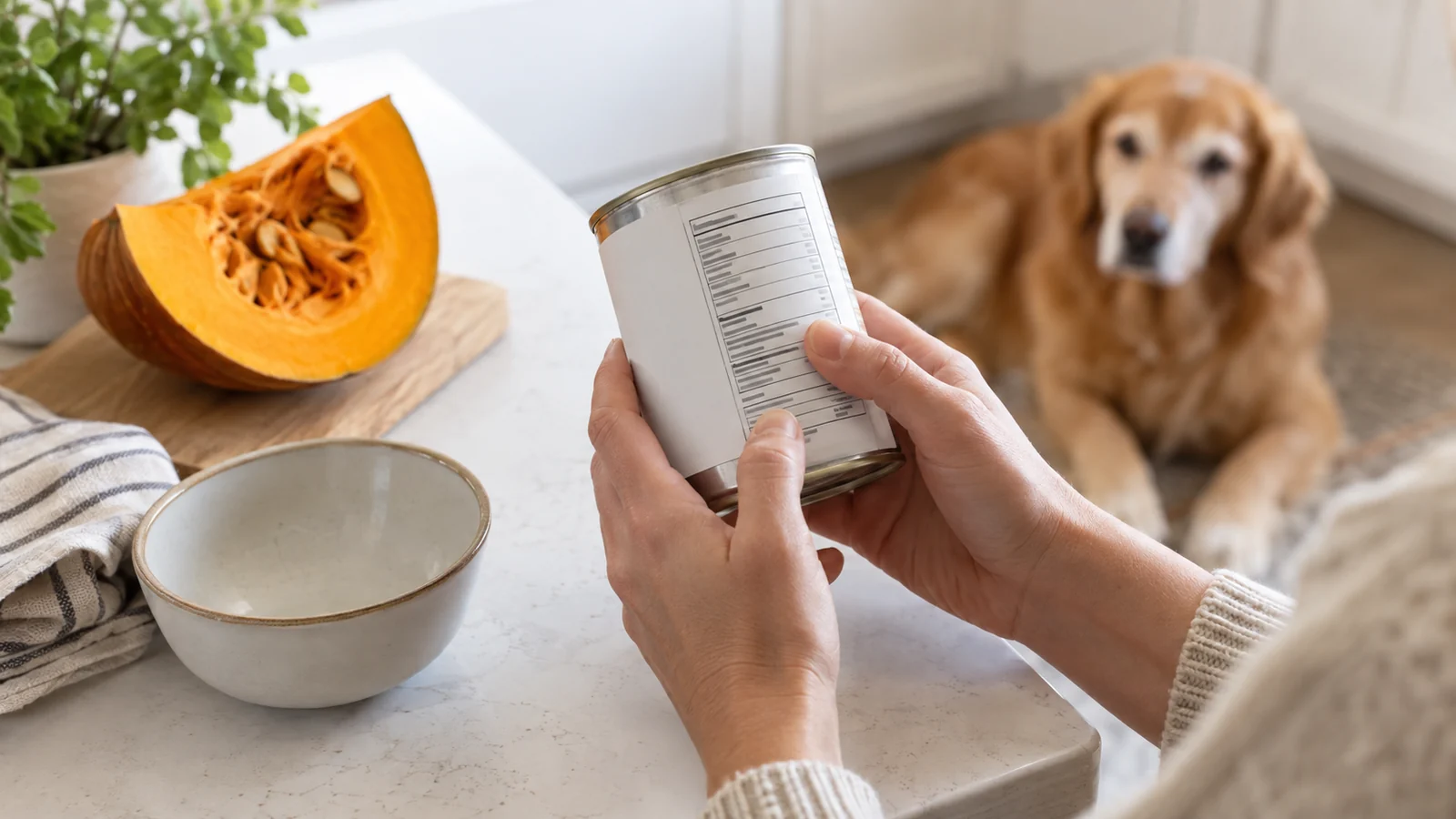
- Turn the can around. A picture of a pumpkin on the front does not establish what is inside.
- Read the ingredient list. The easiest choice is a product whose ingredient list is simply pumpkin.
- Check for sweeteners and seasoning. Do not share a product containing xylitol, added sugar, pumpkin-spice blends, salt, butter, or flavoring.
- Notice the product name. “Pumpkin puree” and “pumpkin pie filling” can sit close together on a shelf while serving very different purposes.
- Consider your dog’s normal diet. A dog on a prescription diet, with dietary sensitivities, or with a diagnosed medical condition needs advice from the veterinary team before a new extra is added.
Why pumpkin has a digestive reputation
Pumpkin contains dietary fiber. In clinical nutrition, fiber may absorb water, add bulk to stool, and change how material moves through the large intestine. The Merck Veterinary Manual discusses pumpkin as one possible fiber source within the management of constipation, while VCA Animal Hospitals notes that a veterinary team may suggest small amounts of plain pumpkin as supportive care for some otherwise healthy pets with diarrhea.
Those statements do not make pumpkin a diagnosis or a universal treatment. Diarrhea and constipation are symptoms with many possible causes. Adding more fiber can be unhelpful for some dogs, and experimenting with food can delay care when something more serious is happening. If you are reaching for pumpkin because your dog is unwell, call the veterinary clinic first and describe the dog’s age, normal diet, other health conditions, how long the change has lasted, and any other signs you have seen.
Keep pumpkin small enough to stay an extra
A plain food can still crowd out a balanced diet when it becomes a large or frequent addition. The World Small Animal Veterinary Association Nutrition Committee advises keeping all treats below 10% of a dog’s daily calories and says the veterinary team should determine a suitable type and quantity for the individual dog.
That is why this article does not give a universal spoonful-by-body-weight chart. A puppy, a small adult dog, a dog managing weight, and a dog on a veterinary diet do not have the same nutritional context. If you simply want to share a taste with a healthy dog, keep it plain and modest. If you want to use pumpkin regularly or to change stool, ask for an amount that fits the whole diet.
Keep outdoor decorations outside the food decision
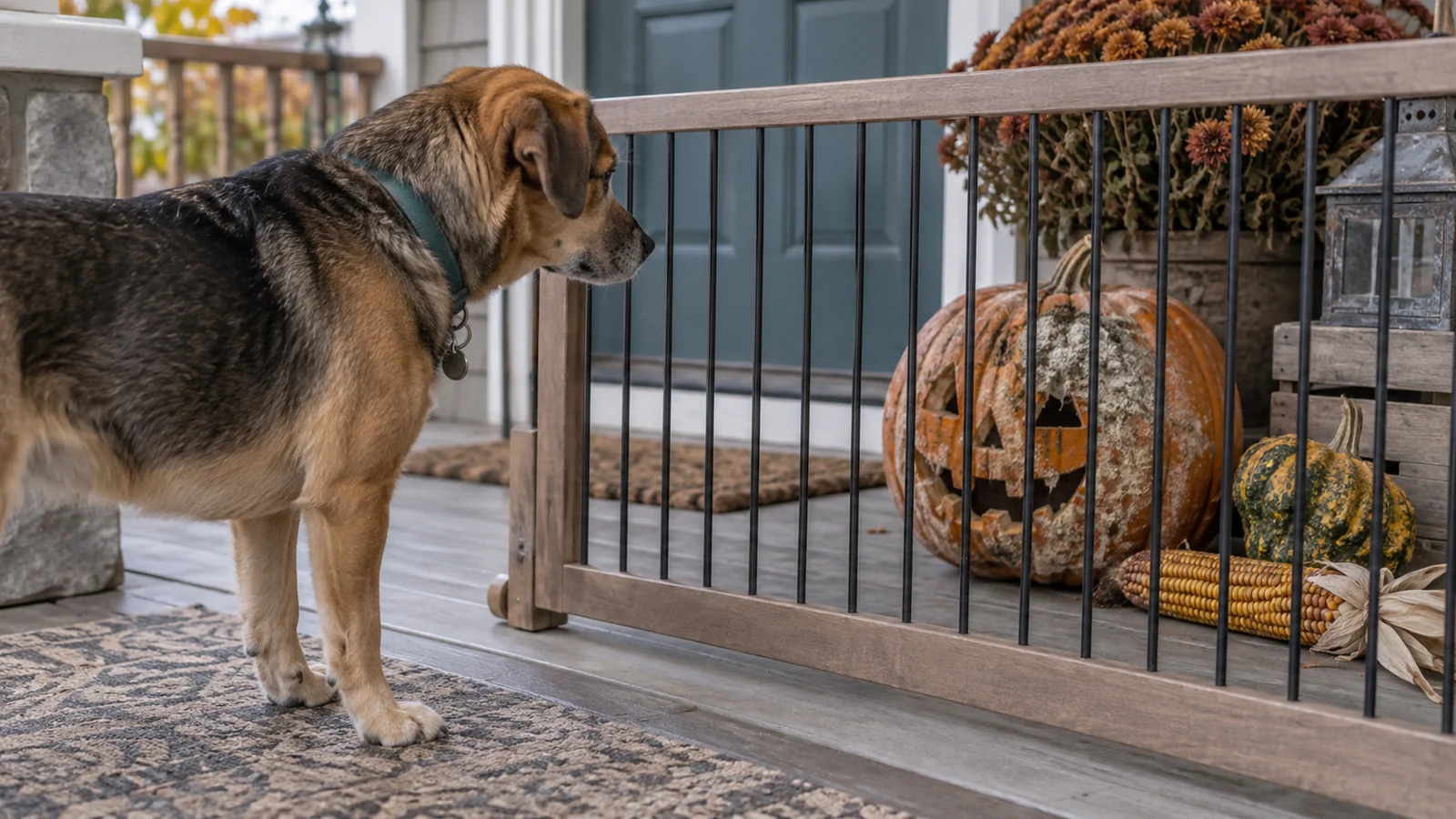
A whole fresh pumpkin in the kitchen is not the same as a carved pumpkin that has spent days outdoors. The surface can soften and grow mold, while the rind, stem, and broken decorative pieces remain tempting to a curious dog. Cornell University College of Veterinary Medicine advises contacting a veterinarian if a pet eats moldy pumpkin.
Seasonal displays may also include corn cobs and hard gourds. These objects are not necessarily poisonous, but swallowed pieces can create a blockage. Use a gate, closed door, or raised location that your dog genuinely cannot reach; “usually ignores it” is not the same as inaccessible.
When pumpkin advice should stop and veterinary care should start
Contact a veterinarian, an emergency animal hospital, or an animal poison-control service promptly if your dog may have eaten xylitol, a moldy pumpkin, or a large hard piece of rind, stem, gourd, or corn cob. Do not wait for an online feeding trick to work.
Veterinary assessment also matters when digestive signs are persistent or severe, or when they occur with blood or black stool, repeated vomiting, marked lethargy, refusal to eat or drink, abdominal discomfort, weakness, collapse, shaking, or seizures. If your dog is a puppy, older, very small, or living with an existing medical condition, mention that when you call. The safest next step depends on the dog and the full pattern, not on pumpkin alone.
A seasonal detail worth remembering
Sometimes the moment you remember is not the treat at all. It is the white blaze tilted toward the counter, the one raised ear, or the patient sit beside an autumn grocery bag. A photograph that catches that unmistakable expression can also become the reference for a full-color custom pet sculpture. The image below is a generated product visualization, not a customer commission.

Frequently asked questions
Can dogs eat canned pumpkin?
Many healthy dogs can have a small amount of 100% pure canned pumpkin. Read the ingredient list. Pumpkin pie filling, sweetened puree, and spiced mixtures are different products and should not be shared.
Can dogs eat raw pumpkin?
Raw pumpkin flesh is not the simplest choice. Hard pieces, rind, and stem are difficult to chew and may create choking or obstruction concerns. Plain cooked flesh is softer; remove the hard exterior and keep the serving modest.
Does pumpkin cure dog diarrhea or constipation?
No. Fiber may be useful in some veterinary plans, but diarrhea and constipation are symptoms rather than diagnoses. Call your veterinary team before treating a new or repeated digestive problem at home.
How much pumpkin can I give my dog?
There is no single amount that fits every dog. Size, age, health, normal diet, and the reason for adding pumpkin all matter. WSAVA recommends keeping all treats below 10% of daily calories; ask your veterinary team for an individual amount if pumpkin will be more than an occasional taste.
Can dogs eat pumpkin seeds?
Seeds add a separate choking, fat, and preparation question without being necessary to share the pumpkin experience. The cautious choice is to remove them. If you want to use seeds as a regular treat, ask your veterinarian about a form and amount that fit your dog.
What if my dog ate pumpkin pie?
Check the actual ingredients and estimate how much was eaten. If xylitol may be present, treat it as an emergency and call immediately. For other pies or an unknown recipe, contact your veterinarian or animal poison control for advice based on the ingredients, amount, dog, and current signs.
The useful rule to keep
Dogs and pumpkin are not a simple yes-or-no pairing. Plain cooked flesh and single-ingredient canned pumpkin can be reasonable occasional extras for many healthy dogs. Desserts, sweetened or spiced mixtures, moldy decorations, and hard pieces belong out of reach. Read the label, keep extras small, and let a veterinarian—not an internet serving chart—guide any attempt to manage illness.
For more evidence-led pet stories, breed histories, and everyday-care guides, visit the Tiny Presence blog.