Your dog drops a frayed toy at your feet, looks up, and waits. Maybe it happens the moment you walk through the door. Maybe it happens while you are answering an email, making dinner, or trying to enjoy five quiet minutes on the sofa. The moment feels clear until you ask what it means: is your dog asking to play, offering a gift, or simply carrying something they love?
Usually, the toy is part of an interaction. But there is no single translation that fits every dog or every day. The most useful answer comes from the whole sequence: what happened before the toy arrived, what your dog’s body looked like, whether they wanted you to take the object, and what happened after you responded. Here is what research can tell us, what careful observation can add, and when a toy interaction deserves more space instead of more excitement.
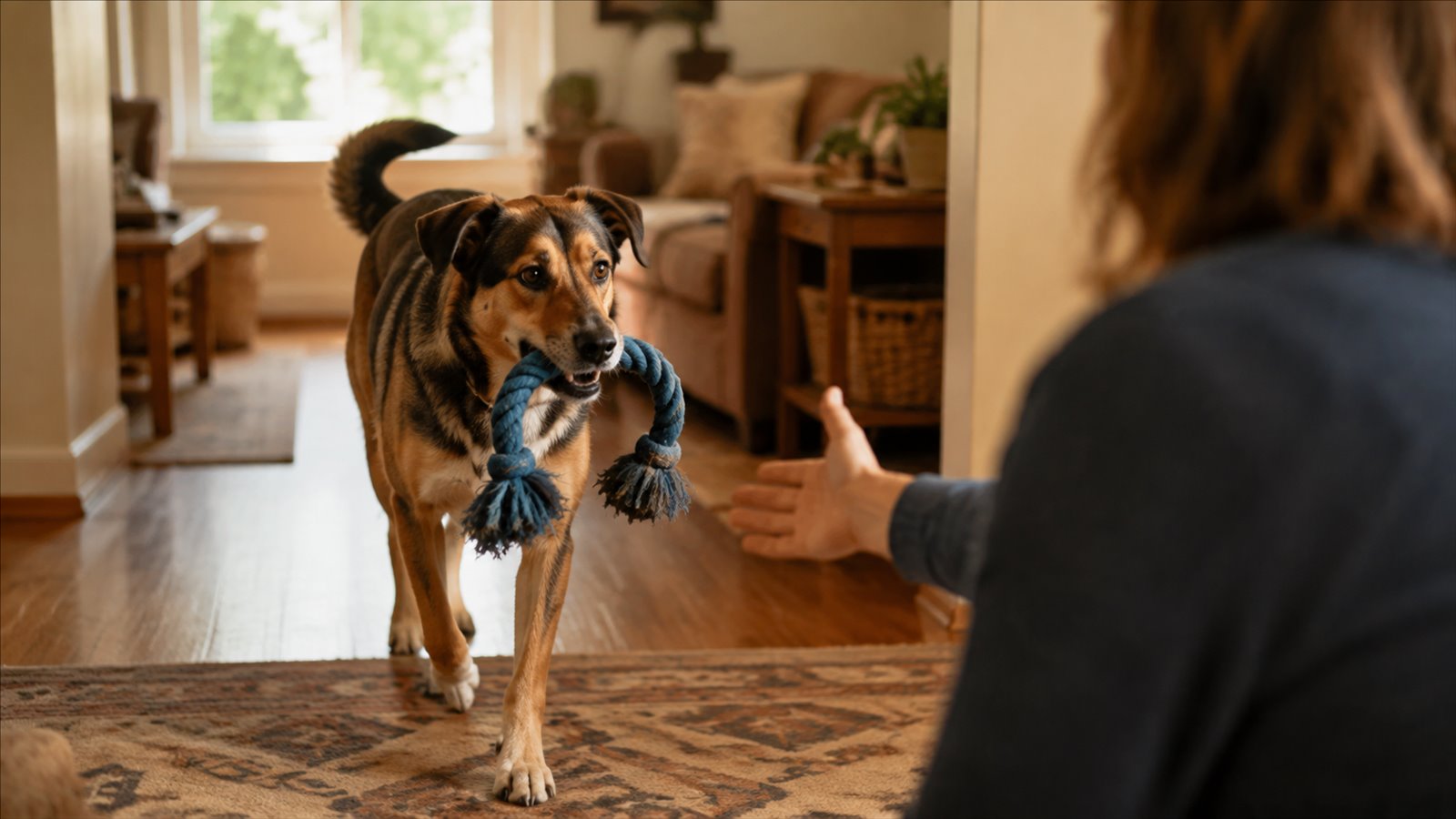
The short answer: your dog may be inviting connection
Many dogs bring toys because they want something to happen between you. That might be fetch, tug, a brief exchange, a greeting ritual, or simply the attention that has followed this behavior before. The object is useful because it gives the interaction a focus: you can look at it, reach toward it, throw it, hold it, or acknowledge the dog carrying it.
That does not mean every approach is an invitation to a long play session. One dog may drop the toy and wait. Another may keep it in their mouth and bounce away. A third may settle beside you with the toy still close, as if the important part was being near you rather than starting a game. The same object can serve different jobs in different moments.
What happens before the toy arrives?
Start with the event that came first. If you were just playing, the toy may be a way to restart a shared activity. If you have just come home, it may be woven into your dog’s greeting routine. If you have been working quietly for an hour, it may be a learned way to ask for a change in the room.
This is more reliable than assigning a fixed meaning to a tennis ball, rope, or plush animal. The toy has a history with your dog. It may be associated with a particular game, person, time of day, or response. Look for the pattern your dog repeats, not the story that sounds most charming.
After shared play, the toy can help a dog re-engage a person
A small peer-reviewed study offers a useful clue. In research published in Animal Cognition, one familiar person played with a pet dog while another familiar person watched. After the activity was interrupted, the dogs looked toward and offered the toy to the former player more often than to the bystander. The final analysis included 109 trials from 33 dogs, drawn from a wider group of 36 pet dogs.
The result fits a moment many owners recognize: after a game pauses, the dog carries the object back to the person who was part of the game. It suggests that dogs can use the object and the person together as part of a remembered social activity. It does not prove that every dog is expressing one specific emotion, and the authors describe the evidence as preliminary. The study’s transition may also have invited the dogs to re-engage, so the finding should be read as a careful clue, not a universal translation.
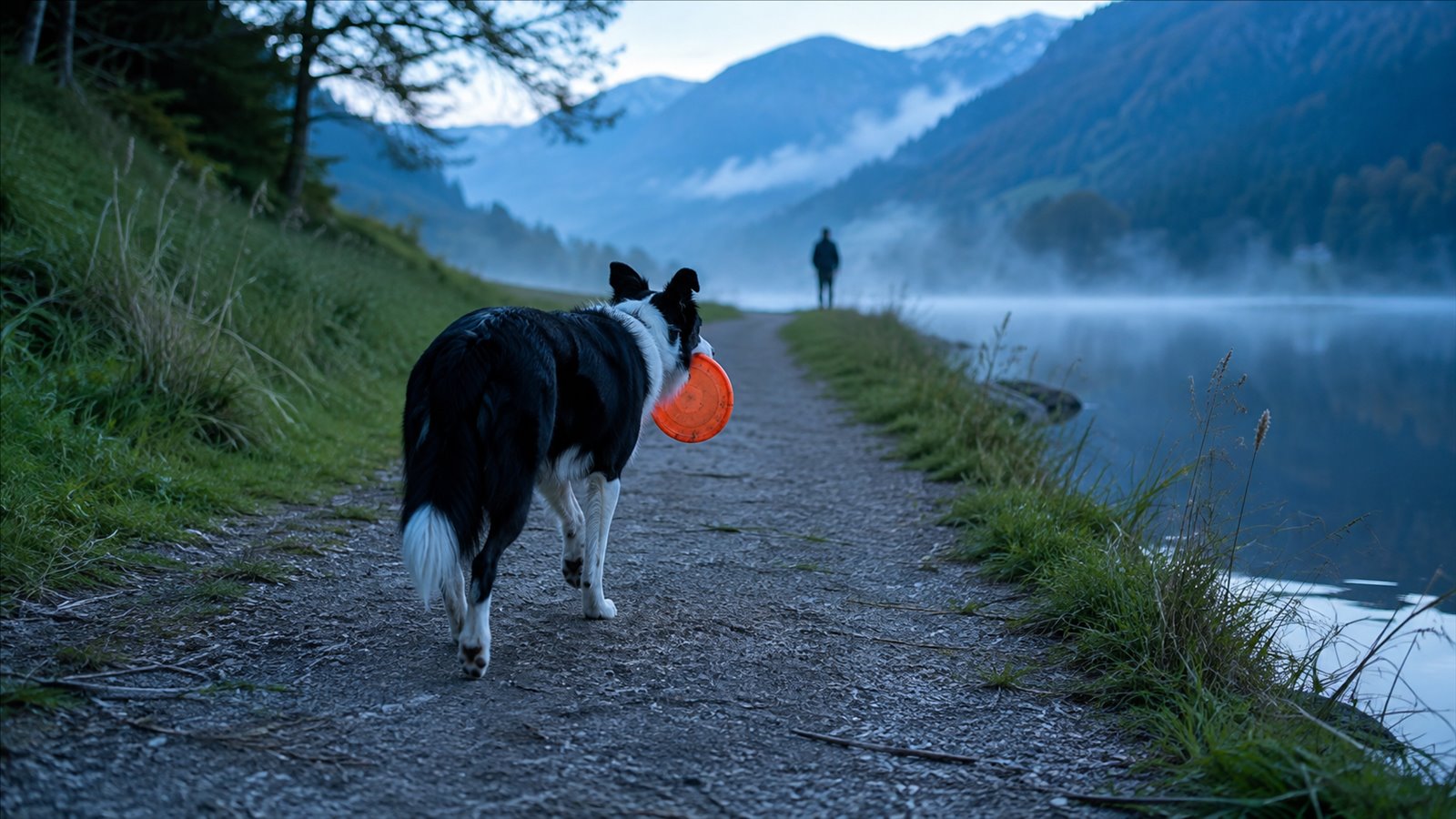
Four common contexts and what to watch next
1. Your dog brings the toy, drops it, and looks at you
This pattern is often consistent with an open invitation to continue an activity. The strongest clue is not the drop by itself but the sequence around it: your dog approaches, checks your face, waits for a response, and repeats the routine when the game begins again. A loose body and an easy shift between you and the toy can support that interpretation.
Still, “often” is not “always.” Your dog may have learned that dropping a toy reliably earns eye contact or conversation, even on a day when they are not asking you to throw it. A short acknowledgment may be all they wanted.
2. Your dog brings the toy but jumps away when you reach for it
That can be a playful keep-away pattern, especially when the dog returns quickly, stays loose, and invites you to follow the same routine. It can also mean that the dog wants the interaction to stay at a distance. Do not decide from the toy alone. Notice whether the dog’s movement is springy and flexible or suddenly still and guarded, and whether they come back after you stop reaching.
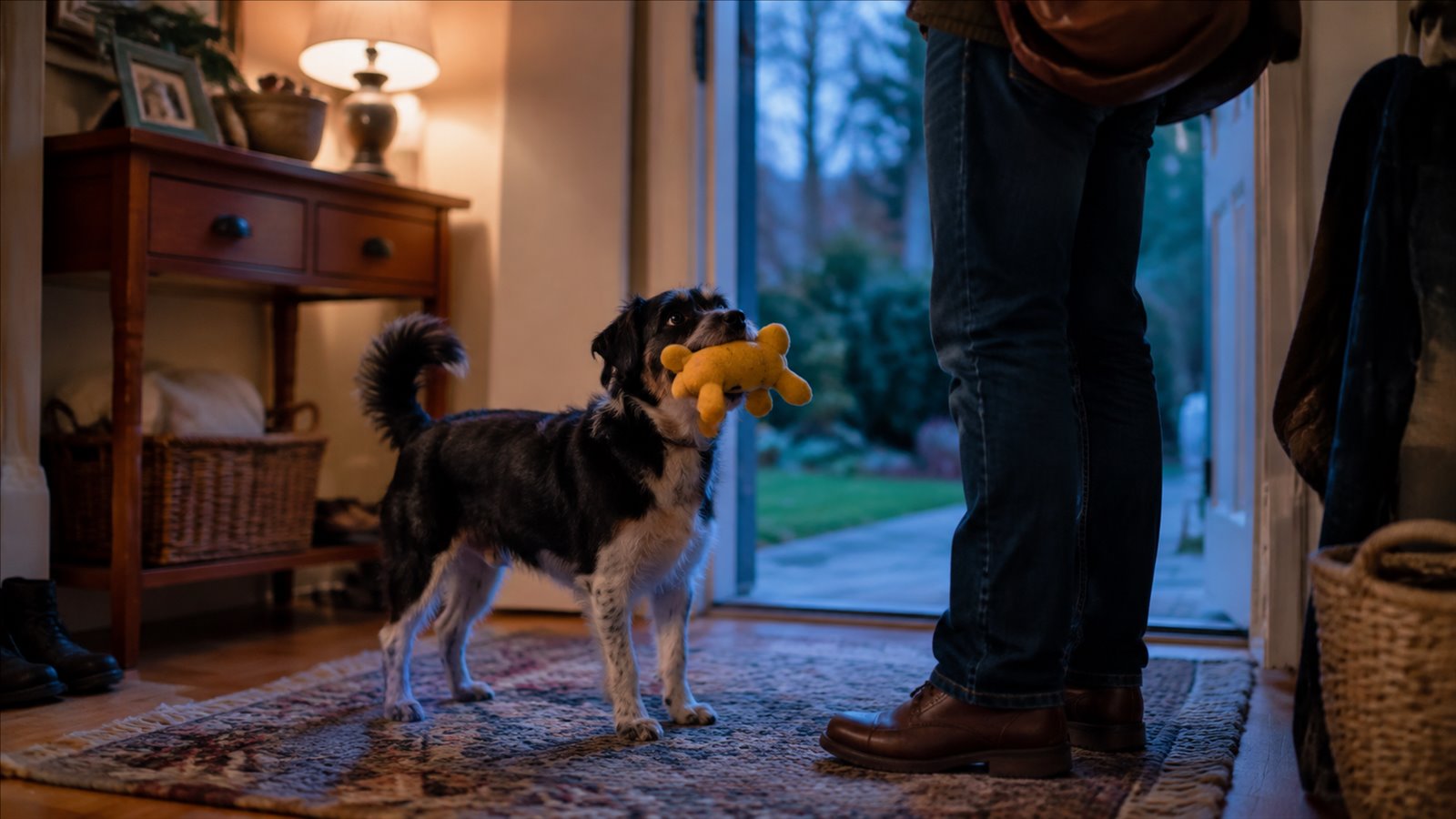
3. Your dog carries a toy to the door when you come home
A toy can become part of a greeting script. The dog hears the door, picks up a familiar object, and approaches because this sequence has become associated with your arrival and an interesting response. Some dogs then want fetch or tug. Some parade the toy for a moment and leave it nearby. Some simply seem more comfortable greeting with something in their mouth.
Research on fetching also reminds us that human responses matter. A return can be reinforced by praise, petting, attention, or the continuation of a game. Over time, “I carry this to my person” can become a dependable way to start something social without the dog needing to have one human-like explanation for the behavior.
4. Your dog brings the toy and settles beside you
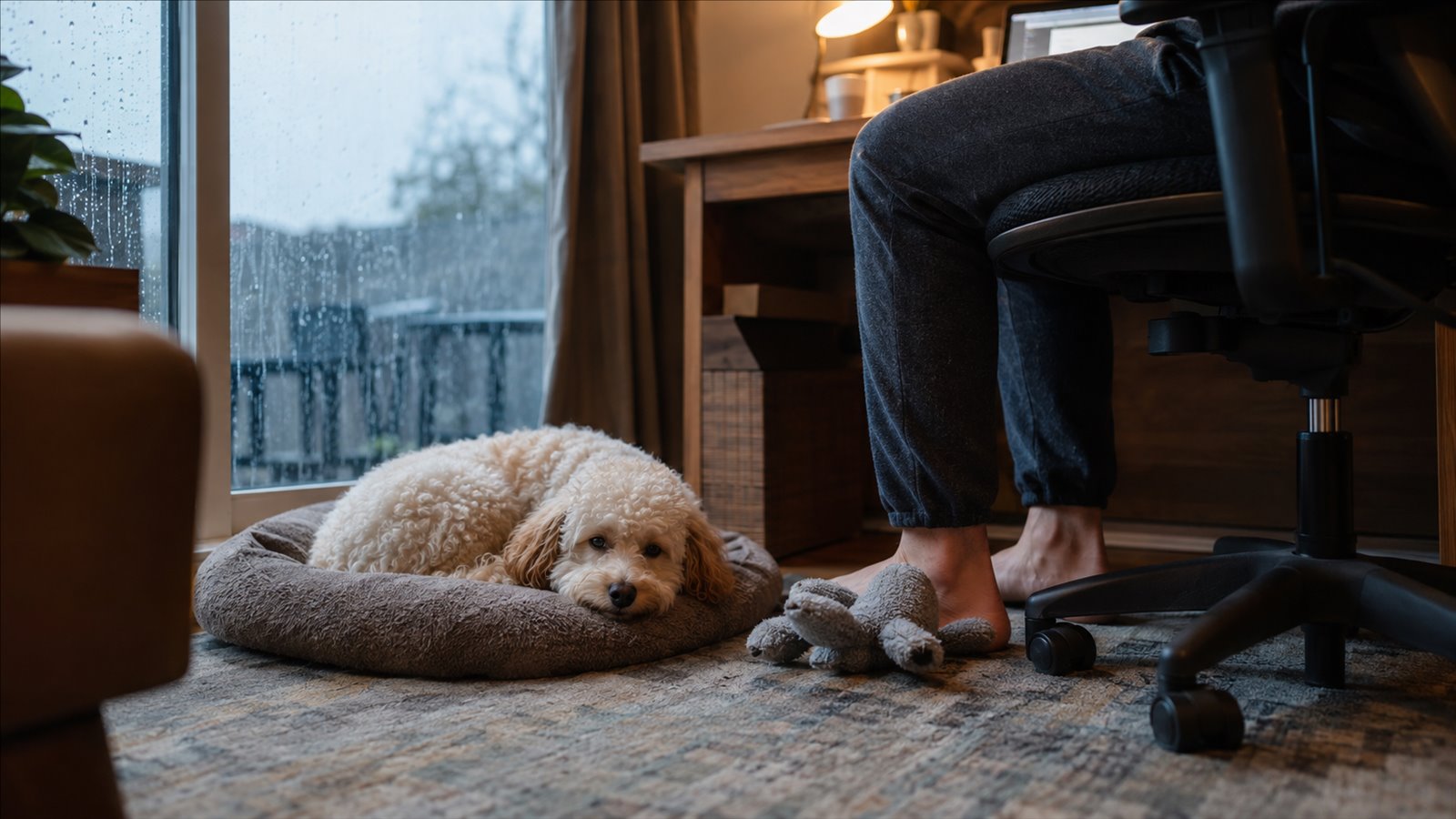
Not every toy presentation is a request for an active game. A dog may carry a favored object to the place where you are, put it down, and rest. The meaningful part may be proximity, a familiar routine, or the comfort of having the toy nearby while you share the same room.
An owner-perception study found that people interpreted toy-presenting in different ways, including play, attention, comfort, and gift-like offering. That finding is valuable precisely because it does not force one answer. It shows how easily a real behavior can carry different meanings across individual dog–human relationships, and why owner interpretation should be kept distinct from proven canine intent.
Read the dog’s body, not only the object
The American Veterinary Society of Animal Behavior describes canine facial expressions and postures as important parts of communication. Around a valued resource, a dog may become still, lower the head, hold the neck over the item, turn the eyes sideways, or show some white of the eye. A relaxed dog may look soft and flexible, but no single feature should be treated as a diagnosis.
If the toy interaction looks loose and social, you can acknowledge it without promising a game every time. If the dog stiffens, freezes, growls, snaps, or guards the object when someone approaches, stop reaching and give them space. Do not test the dog by taking the toy away, and do not ask a child to handle the situation. A veterinarian or qualified behavior professional can help assess the pattern safely, especially if the behavior is new, escalating, or connected to pain, fear, or a sudden change at home.
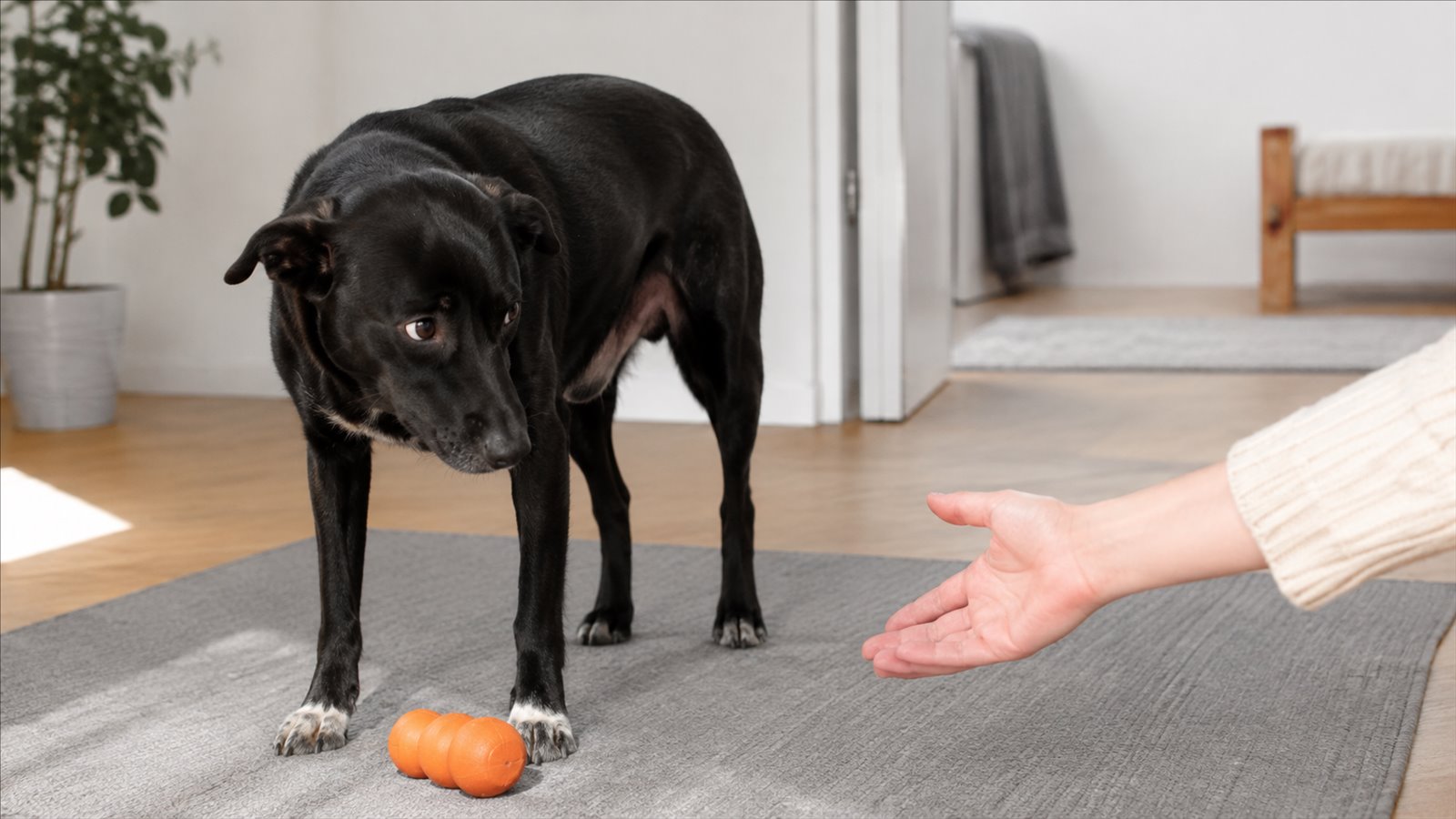
How to respond when your dog brings a toy
First, pause long enough to observe. Is your dog asking you to throw, offering the toy and waiting, carrying it past you, or settling nearby? You can respond to the actual moment rather than to an imagined message.
- If the dog looks relaxed and you have time, offer a brief shared activity or calm attention.
- If you are busy, acknowledge the dog and keep the boundary predictable. A warm response does not require an immediate game.
- If the dog will not release the toy, do not pull it out of their mouth or turn the interaction into a contest.
- Check toys for damage and choose a size that cannot be swallowed. Veterinary guidance recommends supervision at first and extra care when a pet guards a valuable toy.
- If the dog’s behavior changes suddenly, or if there is guarding, fear, pain, or risk of a bite, seek qualified help instead of relying on an online interpretation.
The goal is not to decode every behavior perfectly. It is to become more accurate over time: notice the setting, respond calmly, and learn which rituals are genuinely shared between you and your dog.
The small ritual is part of your dog’s personal history
A toy can be ordinary to everyone else and still be part of the private language of one household. It may be the ball that appears after every walk, the soft animal carried to the door, or the frayed rope placed beside your chair while your dog settles into the evening. Those details are not interchangeable, even when the objects are.
If a favorite photograph preserves that familiar posture, expression, or ritual, it can also become visual reference for a custom pet sculpture. The point is not to turn a general “dog with a toy” into a generic keepsake. It is to preserve the individual detail your family recognizes immediately.
Quick answers
Does my dog bring me toys because they want to play?
Often, a toy is part of an invitation to interact, but it is not a guaranteed request for a full game. Look at what your dog does before and after bringing it: dropping, waiting, bouncing away, returning, or settling nearby all add different context.
Why does my dog bring me a toy but not let me take it?
Your dog may be inviting a chase or tug interaction, enjoying the attention, or preferring to keep the object while staying close. If the body is loose and the dog remains socially engaged, it may be play. If the dog becomes still or guards the toy, stop reaching and give space.
Why does my dog bring me a toy when I come home?
The toy may be part of a learned greeting routine, an excited request for interaction, or a familiar way to approach you. The meaning is individual, so observe whether your dog wants a game, shows the toy briefly, or settles after greeting.
There is more than one answer because there is more than one relationship
When your dog brings you a toy, the most honest answer is usually not a single word such as “love,” “gift,” or “play.” It is a small social sequence built from history: what you have done together, what your dog has learned to expect, and what their body is saying today.
Notice the invitation when it is there, respect the boundary when it is not, and keep the ordinary details that make the ritual yours. For more reader-first pet stories and behavior explainers, visit the Tiny Presence blog.